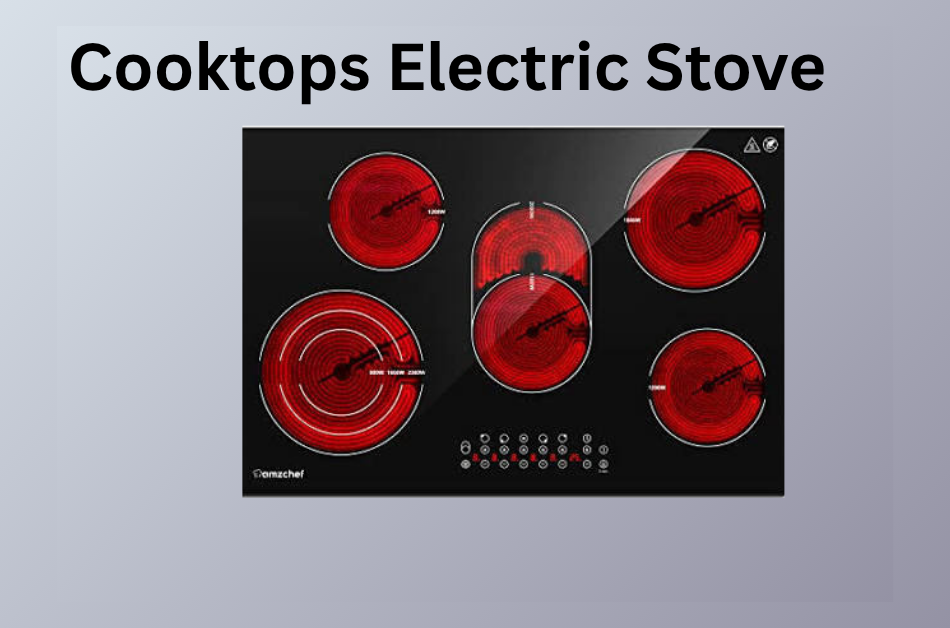
Cooktops Electric Stove Explained: Types, Costs, and How to Choose the Right One.
You can figure out which best suits your budget for kitchens as well as your cooking preferences. Cooktops Electric stove are appliances that heat cookware with electronic coils a glass surface or induction technology instead the traditional open flame.
It’s one of the most sought-after improvements that people make when they do the renovation of their kitchens and also one of the most confusing, since “Cooktops Electric stove,” “electric stove,” and “electric range” get used as interchangeable terms, even though they’re not exactly the same thing.
A cooktop is essentially the stovetop’s surface -it is in its own space, separated from the oven. A range blends the oven and Cooktops Electric stove into an all-in-one unit. If you’re in the market for a “stove,” you may have a look at both, based on the kitchen’s design.
This guide explains how Cooktops Electric stove function and the various types of cooktops available, the prices they charge, and how they compare to induction and gas cooktops, as well as the things you need to know prior to installing one, including an important point that many buying guides do not cover: the electrical requirements vary according to where in the world you reside.
How Cooktops Electric Stove Work?
Cooktops Electric stove convert electric current into heat; however, they do this in three different ways.
Cooktops Electric stove made of coils conduct current through an exposed coil of metal. The coil gets heated up by simple electrical resistance, and the cooktops electric stove placed directly on top absorbs the heat by making contact. It’s the earliest and simplest cooktops electric stove and is also the least expensive to purchase.
Smooth-top, also known as radiant cooktops, are similar to cooktops electric stove that hide resistance elements under a vitrified glass that has been tempered. The glass reflects heat from the element beneath and then releases it to the cookware—the same heating concept as a coil stove, only with a flat, easy-to-clean top of glass.
Induction Cooktops Electric stove perform differently. Instead of heating the element and then transferring the heat to the cookware, the induction cooktops electric stove creates an electromagnetic field that creates warmth directly within the cookware itself, so long as the cookware is made of magnetic (ferrous) metal such as cast iron or other stainless steels. The glass surface isn’t warming on its own. It is only hot when the pan that sits on top of it is hot.
This last aspect is important an awful lot to prospective buyers, since it means that induction cooktops electric stove aren’t compatible with every cookware. An easy way to test compatibility prior to purchasing new cookware: if the refrigerator magnet adheres firmly to the surface of your pot, it’s compatible with induction.
Types of Cooktops Electric stove Compared:
| Type | How It Heats | Typical Price Range | Heat-Up Speed | Cookware Needed |
| Coil | Direct-contact resistance coil | $250-$600 | Slow to moderate | Any flat-bottomed pan |
| Smooth top (radiant) | Glass-covered resistance elements | $400-$1,200 | Moderate | Any flat-bottomed pan |
| Induction | Electromagnetic field | $900-$3,500+ | Fast | Magnet (ferrous) cookware is only |
| Hybrid (induction + radiant zones) | Mixed | $1,500-$4,000+ | Fast | Mixed |
(Price ranges reflect the general consumer trends reported across industries and sources, and they will differ based on the brand, region, and even characteristics.)
If price is your primary factor, coil cooktops electric stove remain the cheapest option for purchasing an electric stove. If you’re looking for an easy-to-clean glass surface that doesn’t cost as much as induction, a smooth top is the most cost-effective option. If efficiency and speed matter more than upfront cost and you’re willing to examine your cooking equipment, Induction is the top one of the three.
How Electric Cooktops Work?
All electric cooktops convert electric current into heat; however, they do so in three different ways.
1.An exposed coil of metal powers coil cooktops:

The coil is heated by simple electrical resistance, while the pot that sits directly on it absorbs the heat via contact. It’s the earliest and simplest electric cooktop and is also the least expensive to buy.
2.Smooth-tops, also called radiant cooktops:

They conceal similar elements of resistance beneath the surface of tempered ceramic glass. It absorbs heat in the element below and then radiates it upwards to the cookware. It’s the same heating system as a coil stove but with a smooth, easy-to-clean top of glass.
3.Induction cooktops:

They operate differently. Instead of heating the element before transferring the heat to the cookware, an induction cooktop produces an electromagnetic field which creates warmth directly within the cookware — so long as the cookware is made of magnetic (ferrous) metal, such as cast iron or other stainless steels. The glass surface doesn’t really heat itself but it gets hot due to the fact that the pan on top of it is hot.
The last part is crucial to buyers since it means that induction cooktops aren’t compatible with every pan. An easy way to test compatibility prior to purchasing new cookware: if the refrigerator magnet is firmly attached to the surface of the pan, it’ll work on induction.
Electronics and gas. Induction: Which Makes Sense for You?
This is typically the most important issue that buyers face because most kitchens are able to technically accommodate all three.
| Factor | Coil/Smooth top Electric | Gas | Induction |
| Control of temperature | Moderate | Quick, accurate, and instant | Extremely precise, instantaneous |
| Efficiency of energy | Moderate | Lower (a large amount of heat escapes from the pan) | Highest |
| Cleaning | Very easy (smooth top) up to medium (coil) | Grates are harder, which is due to the grates and caps on burners | Easiest |
| The cost of up-front | Low to mid | Low to mid | Mid-to-high |
| Cookware is required | Any | Any | Magnetic only |
| It is a viable option in the event of a power outage. | No | Most of the time, yes, but with the manual ignition | No |
Gas has a distinct benefit that electric cannot duplicate: it’s able to continue working even in power outages, in the event that you are able to light it manually. This is a significant benefit for those living in areas susceptible to power interruptions.
Induction and electric cooktops, on the other hand, are more likely to improve the quality of air, as there’s no burning happening in your kitchen. It’s something to be aware of for those who are sensitive to indoor air pollution, or just prefer not having open flames around your children or pets.
Who Should Choose an cooktops electric stove?
Cooktops electric stove can make the most sense in a couple of typical situations:
- Houses without a gas line, in which case the cost of running a gas line would be costly or even impossible
- Owners or renters who need an easy-to-clean glass surface
- Cooks who favor even heat and immediate flame control
- Anyone who is renovating and interested in switching cooking equipment to increase the efficiency and speed of induction.
- Households who want to stay clear of the combustion byproducts that are produced indoors
If you already own gas and you love the feeling of controlling an open flame, electric could appear to be a step down in response, unless you opt for induction, which many gas lovers believe is the only electrical option that can change these devices.
What Cooktops Electric stove Actually Cost?
The cost of the unit is merely a portion of your budget. A realistic cost-of-living picture will include:
- The cooktops electric stove cost is driven by the type of burner or zone count, and whether or not it includes knobs or touch controls.
- Installation labour: If your kitchen isn’t equipped with the proper circuit, be prepared to pay for an electrician, and the cost will vary based on the region and local labour costs.
- New cookware is only applicable when you’re switching to induction cookware and your current cookware isn’t magnetic.
- Continuous energy consumption: Induction is usually the least expensive to run day-to-day. However, coil is typically the most expensive because more heat is lost than absorbed into food.
Since the cost of installation varies greatly by region, it’s worthwhile getting a few estimates locally prior to setting a budget- searching for electricians with a licence who specialise in “cooktops electric stove installation” in the area you live in will provide a more accurate estimate than a national average could.
Electrical Requirements: The Part Most Guides Skip;
Every buying guide goes through different types of cooktop electric stove and costs but does not cover the electrical component — and that’s the place where buyers face unanticipated costs.
A majority of full-sized cooktops electric stoves require the use of a high-voltage circuit that is not the standard outlet for homes. If you live in North America, that typically refers to a 240-volt, 40-50 amp circuit connected to a separate circuit from other appliances within the kitchen. Connecting a cooktop electric stove to the standard 120V outlet isn’t only unwise and dangerous; it’s actually a danger to your fire.
Outside of North America, most homes use the standard 220-240V as their standard household voltage, which means that the distance between wiring requirements and those for cooking is typically smaller; however, a dedicated circuit as well as an appropriately rated breaker is usually required. The electrical permits and codes vary by country, and even by city. This is a location where a licensed local electrician’s opinion is more important than what you read on the internet.
Before purchasing:
- Check which circuit your kitchen is currently using.
- Check with a licensed electrician if your panel is able to accommodate an additional circuit in case you do not have one.
- Include the cost of rewiring in your budget before you decide to fall in love with the particular cooktop.
Making the Decision: A Simple Framework;
Instead of just considering pros and cons in abstract terms, consider the following steps in order:
- Examine your electrical configuration prior to doing so. This alone can remove options or increase costs; therefore, it must shape your budget prior to deciding on your personal preferences.
- Find out the most important factor the initial expense or on-going expenses. Coil wins upfront, and induction prevails over time.
- Consider your cooking equipment. If you own mostly non-magnetic cooking pots (aluminium or copper glass, etc.) Induction is an extra cost.
- Take into consideration who’s in this cooking area. Touch controls look beautiful; however, they are difficult to operate with hands that are soaked or dirty. The knobs may be more comfortable to use for certain individuals, including those who are unable to use their hands or vision.
- Find the length of the cutout that you have. Standard sizes are generally thirty” or 36”; however, smaller 24” choices are available for kitchens with smaller spaces.
- Find out the availability of local services for installation as well as future repairs prior to committing to a brand that isn’t as well-known.
Installation, Safety, and Care
Installation basics:
- Verify the wiring and capacity of the circuit before purchasing
- The countertop cutout should be matched to the template used by the manufacturer.
- Attach using the brackets/clips supplied.
- A licensed electrician should handle all electrical connections.
- Make sure to test each burner or zone prior to sealing the edges of the countertop.
Security points to be taken seriously:
- Do not connect a cooktop with a rating of 240V to an outlet that is standard for household use.
- Glass surfaces will remain hot until the switch shuts off. Be aware of that “hot surface” indicator light as a warning sign, not a guarantee of cooling.
- Replace a chipped or cracked glass cooktop right away. A damaged surface can pose a risk of shock and is not only a cosmetic problem.
- Always shut off power at the breaker prior to beginning any DIY troubleshooting.
Make sure it is in good working order:
- Make sure to clean up spills as soon as they occur Particularly sugary or acidic ones which can cause the surface of glass to be etched when left to bake.
- Use a cream cleanser designed to cook and a scraper to eliminate stuck-on residue, instead of pads that contain sharp abrasives.
- Clean the bottoms of cookware for induction and flat surfaces. This is because food debris could interfere with magnets that make the induction process efficient.
- Avoid sliding rough-bottomed, heavy cookware onto glass surfaces.
Alternatives Worth Knowing About
In the event that none of these conventional cooktops electric stove feel like the perfect match, there are a few options worth considering:
- Two-fuel stoves that combine the cooktops electric stove of a gas cooker along with an electric range for families who require gas’s responsiveness and the baking power of an electric oven.
- Burners that can be used in portable mode offer a non-binding method of determining if you really like cooking induction prior to committing to a full-size appliance.
- A range that combines the cooktops electric stove and oven, instead of requiring a separate cooktop and wall oven, will make it easier to install and lay out the kitchen.
FAQ
What makes an cooktops electric stove more efficient as compared to gas? It depends on the local price of gas and electricity prices. Induction cooktops are typically the most efficient choice for energy efficiency and generally are less expensive per meal than electric or gas coils.
Am I in possession of the capacity to convert a stove powered by gas into electric power? Yes, but it typically requires a high-voltage circuit that is specifically designed for that, where the gas line used to be. This will require an electrician’s opinion and some rewiring costs prior to the cooktop being put in.
What amps does an electric cooktop require? Most full-size electric cooktops require a dedicated circuit of 40-50 amps in areas that use the 240V standard. The specifications vary based on cooktop power and also by country; therefore, make sure to check the particular unit’s specifications sheet.
What is the reason my electric cooktop is cooking unevenly? Uneven heating is usually caused by a warped pan bottom, a damaged element, or, for induction, cookware that’s not in complete, flat contact with the surface.
Can electric cooktops function during power outages? No. Contrary to gas cooktops, which are usually lit manually, electric or induction cooktops depend on power, and they won’t work in the event of a power outage.
What size of breaker will an electric cooktop require? This depends on the cooktop’s wattage. However, breakers of 40 or 50 amps are standard for full-size cooktops. Check your manufacturer’s specifications, rather than making presumptions.
Which model of cooktop is the easiest to keep be free of stains? Smooth-top and induction surfaces are much easier to wash than coils because there aren’t any exposed parts that can be contaminated by spills and spills can be cleaned off directly from the glass surface.
What’s the difference between the Induction Stove and a standard cooktop with a flat top? Induction cools more quickly and heats quicker and uses less energy.However it is expensive upfront and requires the use of magnetic cooking equipment. The smooth top is less expensive and is compatible with the cookware you already own.
Conclusion
The choice of an electric cooktop boils down to three factors: what your kitchen wiring supports, what your cooking equipment situation is, and what you consider speed and efficiency in comparison to initial costs. Coil is still the cheapest start, but a smooth top is an easy-to-clean middle ground, and induction provides the most efficient, fastest cooking options if you’re willing to examine your electrical setup and perhaps your cookware prior to purchasing. Whichever type you choose, make sure your circuit is checked with a certified electrician prior to purchase; it’s the only way to avoid the majority of unpleasant surprises that can occur when you switch to electric.
These information about Cooktops Electric Stove are gathered from different surveys, medical tests and tech giants like Reviewed and more. Our top priority is to provide you valuable information about Cooktops Electric Stove.
For More Details About Different Electric Stove Click Here.