How They Work, Who Should Use Them and How to Choose?
Learn how leg massagers work, who should avoid them, how to use one safely, and how to choose between air compression, shiatsu and massage guns.
By the end of a long shift, a long flight or a hard run, your legs can feel heavy, tight and oddly tired. A leg massager promises to fix that at home, in about twenty minutes, without an appointment.
Sometimes it does help. Other times it is the wrong tool, or an unsafe one. This guide explains what these devices do, how they work, who should skip them and how to pick one that actually fits your problem.
What Is a Leg Massager?
A leg massager is an electric or manual device that applies compression, kneading, vibration, heat or rapid percussion to the feet, calves, knees or thighs. Most home models aim to ease muscle tightness and tired legs. They are wellness tools, not treatments for medical conditions.
You will see the same product category described in several ways: calf leg massager, foot and calf massager, compression leg massager, leg recovery boots, compression boots or air compression leg wraps. The names overlap, but the technology underneath differs, and that difference matters when you buy.
How Leg Massagers Work?
Your calf muscles act as a pump. Each time you walk, they squeeze the veins in your lower leg and push blood back toward the heart. This is part of what physiologists call venous return. When you sit or stand still for hours, that pump rests, and legs can feel heavy.
Most leg massagers try to imitate or support that squeezing action, or they work directly on tight muscle tissue. Six mechanisms cover nearly every device on the market.
Air compression (pneumatic compression):
Sleeves or boots contain several air chambers. The chambers inflate and release in sequence, usually from foot toward thigh, which is why you will see the term sequential compression. The sensation is a slow, rolling squeeze.
This is the technology behind compression boots such as Hyperice Normatec and Therabody JetBoots, as well as many budget wraps from brands like Renpho, Fit King, Cincom, Aootek and Quinear. Specs to compare include the number of air chambers, intensity levels and programs.
Shiatsu kneading:
Rotating nodes press and roll against the calf or foot, loosely imitating the thumb-pressure style of shiatsu. It feels more targeted than air compression and is popular for stubborn knots. Many shiatsu units add heat. Comfier and Homedics are among the brands in this space.
Percussive therapy:

A massage gun, such as a Theragun, delivers fast, short strokes into the muscle. It suits targeted work on the calves, quads and hamstrings. You hold it yourself, so it is not hands-free.
Vibration:
Small motors create oscillation that relaxes surface tissue. It is the gentlest option and is often built into foot platforms and heated wraps.
Heat:
Infrared or thermal elements warm the tissue. Heat can ease stiffness, which is why it appears in many calf and knee wraps. Be careful if your skin sensation is reduced.
EMS and TENS:
Some devices send mild electrical pulses to stimulate muscle or nerves. This is a different category from mechanical massage and is not suitable for people with pacemakers or other implanted electrical devices.
Leg Massager Types Compared:
| Type | Best for | Intensity | Hands-free | Heat common |
| Air compression wraps or boots | Heavy, tired legs, recovery | Gentle to firm | Yes | Sometimes |
| Shiatsu calf or foot unit | Knots, tight calves | Firm | Yes | Often |
| Massage gun | Targeted muscle soreness | Deep | No | No |
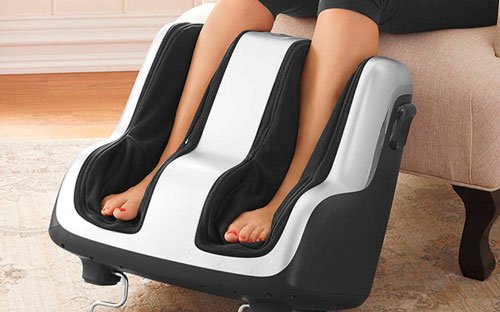
| Foot or leg massager with calf airbags | Standing workers, foot tension | Medium | Yes | Often |
| Vibration platform | General relaxation | Light | Yes | Rare |
| Foam roller or manual tool | Low-cost mobility work | Variable | No | No |
Compression boots, consumer wraps and prescription pumps:
These three get confused often. Compression boots are premium recovery systems aimed at athletes and frequent users. Consumer wraps are cheaper versions of the same idea.
Prescription pneumatic compression pumps are medical devices used under clinical supervision for conditions such as lymphedema or venous problems. A consumer wrap is not a substitute for one, even if the marketing page uses similar language.
What the Evidence Does and Does Not Support?
Supportive evidence is strongest for comfort. Many people feel looser and less sore after a session, and that feeling is real and worth something.
The case for lasting circulation benefits in healthy people is weaker. A temporary squeeze is not the same as treating vein disease. Claims that a device is clinically proven to cure swelling or restless legs often come from manufacturers rather than independent research, so treat them with caution.
For post-exercise soreness, results are mixed. Some athletes report feeling ready sooner, while the measurable performance gains are modest and vary between studies.
A fair summary: leg massagers can ease the sensation of tight, tired legs. They should not be used to self-treat swelling, pain or circulation problems you have not had examined.
Who Can Benefit?
- Desk workers and drivers: long sitting leaves legs heavy by evening.
- Nurses, teachers and retail staff: long standing shifts load the calves and feet.
- Runners, cyclists and gym-goers: soreness known as DOMS (delayed onset muscle soreness) usually peaks a day or two after hard training.
- Frequent flyers: a session after landing can help, though walking during the flight matters more.
- Older adults with general leg tiredness: gentle compression may feel pleasant, with a doctor’s approval.
- People with restless legs syndrome: some find compression or heat calming at night. Because the causes of restless legs vary, ask a clinician before relying on a device.
Who Should Not Use a Leg Massager?
This section matters more than any buying advice. Several groups should avoid these devices or speak to a doctor first.
- Anyone with a current or past deep vein thrombosis (DVT), or a suspected clot.
- Severe varicose veins or phlebitis.
- Certain heart conditions or uncontrolled high blood pressure.
- Peripheral artery disease (PAD).
- Diabetes with peripheral neuropathy or reduced sensation.
- Pregnancy.
- Pacemakers, ICDs or other implanted electrical devices (especially with EMS or TENS).
- Open wounds, skin ulcers, infections or recent surgery.
- Lymphedema, which needs medical compression guidance.
Red flags that need a doctor, not a leg massager:
Swelling in one leg only, cramp-like pain that does not ease, warmth and redness, or swelling that appears suddenly can signal a clot. Massaging or compressing a clot-affected leg could dislodge it and send it to the lungs.
Sudden shortness of breath or chest pain is an emergency. Seek urgent medical care.
Other risks:
- Over-tightening can compress nerves and cause tingling or numbness.
- Running a session far longer than recommended can bruise or irritate skin.
- People on blood thinners should avoid forceful deep pressure that could cause bruising.
Safety Standards and Regulation
In the United States, many powered leg massagers fall under the FDA’s low-risk therapeutic leg massager classification (21 CFR 890.5660, Class I). That is very different from the prescription pumps used for medical compression therapy.
On product pages, look for safety marks relevant to your region: CE in the EU, UKCA in the UK, and UL or ETL in North America. The IEC 60335 family, including the part covering household massage appliances, governs electrical safety for such devices.
A mark is not proof that a device is effective. It is a baseline signal for electrical and build safety.
Some US listings mention FSA or HSA eligibility. Rules differ by product, plan and documentation, so confirm with your plan administrator before assuming a purchase qualifies.
How to Use a Leg Massager Safely?
- Read the manual and make sure none of the conditions above apply to you.
- Sit or recline with your legs supported.
- Fit the wrap or unit so it is snug but not tight, and keep it on intact, dry skin.
- Start on the lowest intensity setting.
- Run one session of about 15 to 30 minutes, or whatever the manufacturer recommends.
- Raise intensity gradually only if it stays comfortable.
- Stop if you feel pain, numbness or tingling.
- Drink water, then stand up slowly.
How long and how often?
Many makers set a timer around 20 minutes. Gentle devices are often used daily, while deep percussion or firm kneading is better a few times a week, with rest days if muscles feel sore.
Can you sleep with one on?
It is better not to. A heated device or a pressurized wrap left on overnight raises the risk of skin irritation and over-compression. Use the timer and auto shutoff.
Sizing and Fit:
Fit decides whether a wrap feels even and comfortable. Measure your calf and thigh circumference and compare them with the chart for the exact model.
People with wide calves or a plus-size build should look for wraps that include size extensions or a full-length zipper design. A wrap that is too tight can cause tingling. One that is too loose will not compress properly, and cheaper units sometimes feel uneven between the left and right leg.
Leg Massager vs Other Options:
| Option | Where it fits |
| Compression socks or stockings | Passive support during long sitting, standing or travel; often recommended by doctors |
| Foam roller | Cheap mobility and muscle release, needs effort and technique |
| Massage gun | Targeted muscle work, not hands-free |
| Sports massage therapist | Hands-on assessment and treatment of specific problem areas |
| Physiotherapy | Persistent pain, injury or movement limits |
| Contrast baths or warm soaks | Relaxation, with limited evidence for recovery |
| Elevating the legs | Simple and free relief for mild end-of-day heaviness |
| Walking and calf raises | Activates the natural calf pump |
A leg massager works best as an add-on to movement, not a replacement for it.
Choosing by Problem
| If your main issue is… | Consider… |
| Heavy, tired legs after sitting or standing | Air compression wraps |
| Tight calves or knots | Shiatsu unit or massage gun |
| Post-workout soreness | Compression boots, or a gun on calves and quads |
| Stiffness and cold feet | Heated wrap with gentle kneading |
| Plantar fascia or foot tension | Foot or leg massager with calf airbags |
| Persistent swelling or pain | A medical check first |
Should you buy one at all?
If your legs are only occasionally tired, a foam roller, short walks and elevating your feet may be enough. A leg massager makes sense if you use it often, prefer hands-free relaxation, or want a steady routine.
If you have a diagnosed circulation or vein condition, let your clinician choose the device or approve your pick.
Features That Matter
- Number of air chambers and modes: more chambers give a smoother wave; modes change the pattern.
- Intensity levels: useful because comfort varies between people and days.
- Timer and auto shutoff: these protect against overlong sessions.
- Heat: helpful for stiffness, but check whether it covers the whole leg or just the knee.
- Cordless design and battery life: cordless units are easier for travel and use at a desk.
- Weight and noise: both affect how often you will actually use it.
- Washable liners or covers: these help hygiene.
- Warranty and return window: important if fit or pressure feels off.
Review counts are a helpful signal, but read the critical reviews for recurring complaints such as uneven pressure, loose zippers or short battery life.
Well-Known Brands and What They Are Known For:
Hyperice’s Normatec line, including Normatec 3 and Normatec Elite, sits at the premium end for recovery boots. Therabody makes JetBoots as well as Theragun percussion devices.
Renpho, Fit King, Cincom, Aootek, Quinear, Nekteck and Comfier cover the budget and mid-range wraps and kneading units. Medisana and Homedics are established names in household health devices.
Brand reputation helps with warranty and support, but it does not guarantee a better fit for you. Compare specifications rather than relying on a name alone.
What They Cost?
Prices vary by country, retailer and season. These are indicative ranges only, so verify them in your market.
| Tier | Typical range (USD) | What you usually get |
| Entry | Under about $60 | Basic wraps or kneading units, fewer modes, shorter warranty |
| Mid-range | About $60 to $200 | Multi-chamber compression or heated shiatsu, better materials |
| Premium | About $200 to $800+ | Recovery boots, wireless or app-controlled systems, longer warranties |
A useful way to judge value is cost per session. A device used four times a week for a year can cost far less per use than regular professional massage, but only if it stays in use.
Care and Lifespan:
- Wipe surfaces with a damp cloth and let them dry completely.
- Follow the maker’s rules on cleaning liners.
- Store hoses and cords loosely to avoid kinks.
- Inspect cords and seams regularly and stop using damaged units.
- Recharge batteries on the maker’s schedule.
How long a device lasts depends on build quality, use frequency and care. Look for replaceable parts and a clear warranty.
For Clinics, Gyms and Retailers:
Businesses buying leg massagers face different questions than individual shoppers. Clinics, physiotherapy practices, gyms and hotels usually care about durability under frequent use, easy cleaning between clients and clear safety documentation.
Retailers and distributors typically look at:
- Bulk pricing and minimum order quantities
- Certifications such as CE, UKCA, UL/ETL and any regional registration
- Warranty and returns handling
- OEM or private-label options
- Spare parts and after-sales support
Ask suppliers for test reports and certification documents rather than relying on a listing. For clinical use, make sure staff screen clients for the contraindications listed above.
Buying Across Regions:
If you are shopping outside your home market or from an international seller, check a few things first.
- Voltage and plugs: confirm the device supports your mains voltage and has the right plug type.
- Warranty service: make sure there is a local service route, not just a foreign address.
- Import duties: these can raise the price of premium brands.
- Counterfeits: buy from authorized sellers, especially for well-known brands.
- Climate: in hot, humid places, breathable wraps may be more comfortable than heated ones.
If you want to try before you buy, check nearby electronics stores, pharmacies and medical supply shops. For hands-on help, search for a physiotherapist or licensed massage therapist near you and check their qualifications and registration.
FAQs
1. Are leg massagers good for you?
For most healthy adults, they are generally safe and can ease tight, tired legs when used as directed. They are not medical treatments, and some people should avoid them.
2. Do leg massagers help circulation?
They may create a temporary feeling of better blood flow. Evidence for lasting circulation benefits in healthy people is limited, and they should not replace care for vein or artery problems.
3. Can a leg massager cause blood clots?
A leg massager does not usually create a clot, but it can be dangerous for someone who already has one. Compression or kneading could dislodge a clot. Anyone with DVT, a past clot or one-sided swelling should see a doctor first.
4. Is it safe to use a leg massager every day?
Gentle models are often used daily for short sessions. If you notice bruising, soreness, numbness or tingling, reduce use or stop and ask a clinician.
5. How long should you use a leg massager?
About 15 to 30 minutes per session is a common guideline, though you should follow your device’s manual and timer.
6. Can I use one with varicose veins, during pregnancy or with diabetes?
Ask your doctor first in all three cases. Severe varicose veins, pregnancy and diabetes with reduced sensation each raise specific safety concerns.
7. Do compression boots actually work?
Many users find them relaxing and useful for feeling less sore. Independent evidence for measurable performance gains is mixed, so treat them as a comfort and recovery aid.
8. Are Normatec boots worth it?
They can be worth it for people who train hard or travel often and will use them regularly. For occasional tiredness, a mid-range wrap or non-device options may offer better value.
9. Air compression or massage gun for calves?
Air compression is hands-free and feels broad and soothing. A massage gun gives targeted deep work on a sore spot. Many athletes use both.
10. Leg massager or compression socks?
Socks offer constant, passive support and are often what doctors suggest for long-term swelling. A leg massager offers timed relaxation sessions. They do different jobs and are not interchangeable.
Conclusion
A leg massager is best understood as a comfort and recovery tool. Match the type to your actual problem: air compression for heavy legs, shiatsu or a massage gun for knots, and heat for stiffness.
Before you buy, rule out the safety issues above, measure your legs and check warranty and return terms. Start with short, low-intensity sessions and pair the device with walking and stretching.
If swelling is new, one-sided or painful, skip the leg massager and get checked first.
These information about best leg massager are gathered from different surveys, medical tests and tech giants like Reviewed and more. Our top priority is to provide you valuable information about best leg massager.
For More Details About Different massage chair Click Here.