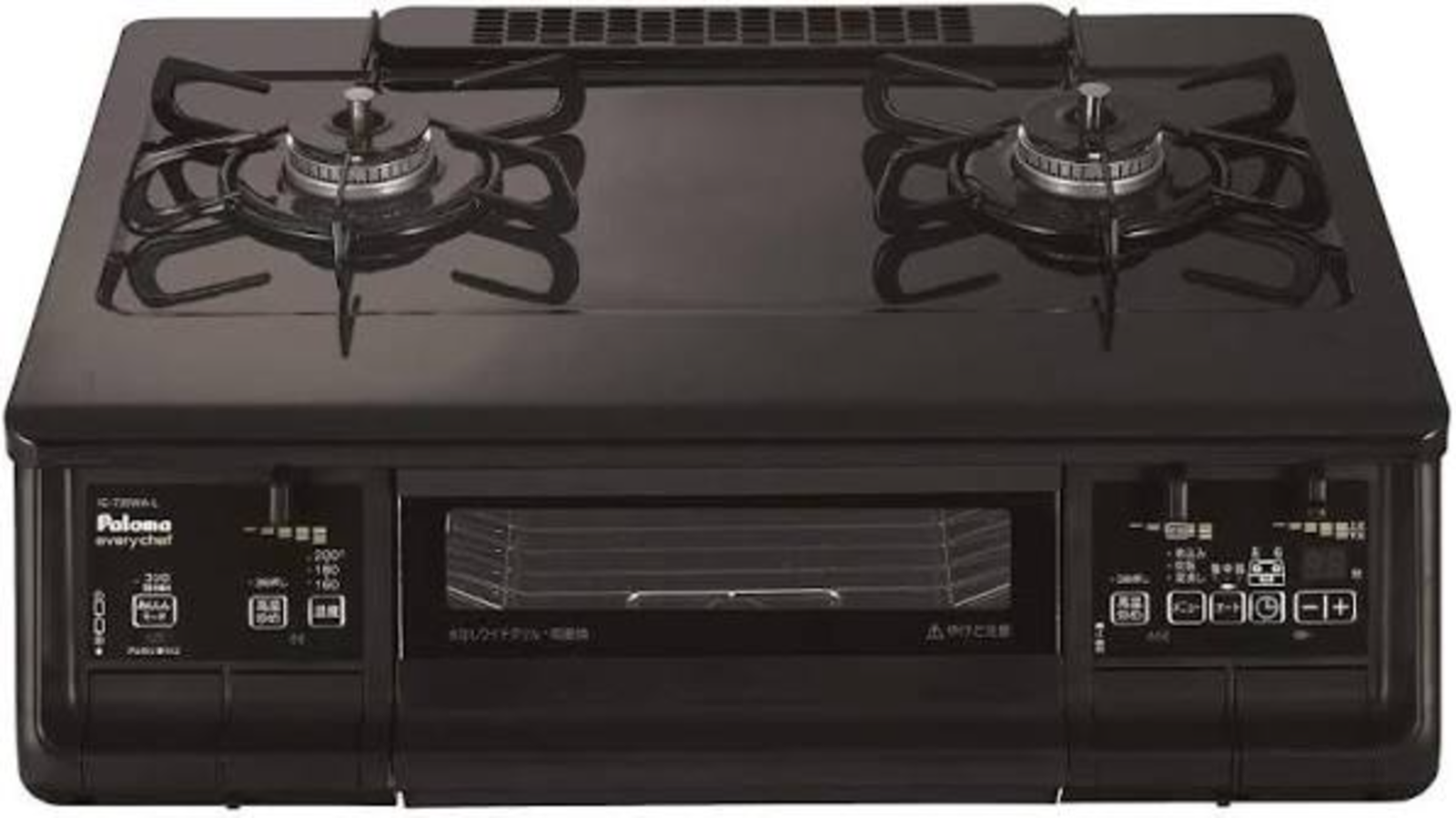
LP Gas Range Guide: How Propane Ranges Work, Cost & Conversion Steps
An LP gas ranges is a cooking stove that has been constructed or modified to burn propane in liquid form in place of natural gas. It makes use of smaller burner orifices and a regulator that is propane-rated to deal with propane’s greater energy density and delivery pressure. For homes that don’t have natural gas lines, for example, rural homes, cabins, mobile homes, and RVs, it’s typically the only option to cook using a real gas fire.
If you’re looking to buy one, convert an existing one, or simply trying to figure out the reason you think your “gas range” isn’t automatically propane-ready, this article walks through everything: how ranges work, how much they cost, how the conversion takes place, and how individuals get in trouble.
What Exactly Is an LP Gas Ranges?
At a glance, an LP gas ranges appears identical to a traditional Lp gas ranges. Same knobs, same burners, same oven. The difference is in the appliance.
Propane, natural and lp gas ranges aren’t the same fuels from the standpoint of combustion. Propane is able to provide two-and-a-half times the energy for each cubic meter compared to natural gas. This means that an LP gas ranges requires smaller burner orifices in order to measure the right amount of gas. utilize a natural-gas-sized outlet with propane, you’ll end up with an enormous, sooty flame instead of a clean flame.
Additionally, propane systems usually offer lp gas ranges at eleven inches of water column (WC) pressure to the appliance, which is compared to 4-7 inches of WC in natural gas. This is why each LP gas ranges system requires its own regulator, designed specifically for propane.
When people ask, “Is a gas range the same as a lp gas range,” the truth is that they are mechanically comparable but not interchangeable without proper orifices, regulators, and the rating plates — typically located inside the storage drawer and on top of the panel- will read “NAT” or “LP gas ranges” clearly. This one line will tell the user what they’re actually working with.
There are other appliances known as an LP gas range, propane stove, as well as a propane cooking range, also known as the bottled gas range; all of them referring to the identical concept.
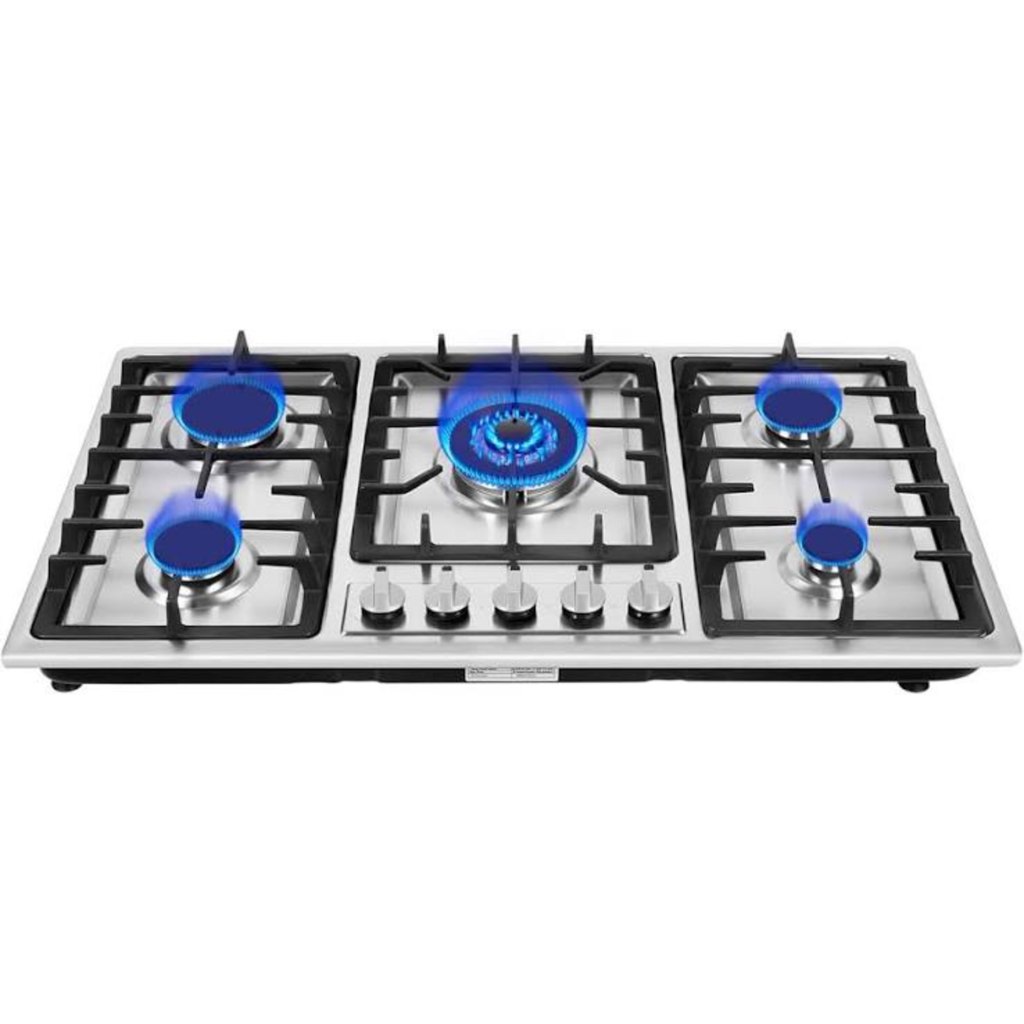
Why It Matters — and Who Actually Needs One?
It’s not necessary for every household to consider lp gas ranges. If natural gas is piping into your home, it’s usually the simplest alternative, as well as the least expensive, and there’s no need to incorporate propane tanks into the mix.
Lp gas ranges can be used in certain scenarios:
- Rural homes without gas mains. This is the most frequent reason why people purchase propane appliances in the first instance.
- Solar-powered cabins or off-grid homes. Gas burners don’t require electricity for operation, and this is a big factor when your power source is restricted.
- Housing manufactured and mobile. Many parks and manufactured home communities are built with propane tanks.
- Camping and RVs. The range typically has a lp gas ranges that is shared with the water heater as well as the furnace.
- Anyone who would like cooking that can withstand power interruptions. Standing-pilot or piezo-ignition LP gas ranges can still be lit even without grid power.
If you’re renting on an agreement that prohibits the installation of tanks, or if you are already using natural lp gas ranges on your property, then the calculation typically does not include propane. Anyone else, particularly those who live in rural areas and households that are off-grid, are the primary consumers of this type of appliance.
How an LP Gas Ranges Actually Works?
It is helpful to walk the entire path that lp gas ranges travels from tank to flame
- Storage: Propane is stored in a pressurized tank located on your property, whether the cylinder is portable or a more substantial fixed tank.
- A two-stage regulator lowers the tank’s pressure (which is influenced by temperature) to constant delivery pressure. Typically, it is about 11” WC, for a temperature range of.
- Delivery: Copper pipe, CSST (corrugated stainless steel tubing), and black iron pipes transport an appliance’s gas supply.
- Metering: The burner’s orifices, which are specifically designed for propane, determine exactly how much gas gets to each burner.
- Ignition: Based on what model you have, this is accomplished through electronic spark, piezo ignition, or a stand-up pilot lamp.
- Cutoff for safety: The thermocouple or a flame-sensing valve shuts off gas flow when the flame ceases to burn; that’s why a gas range that doesn’t remain lit is usually an issue with a thermocouple rather than a more serious issue.
The orifice-sizing process is the step that is often overlooked in their model of how the process is done, and it’s the most frequent cause of issues following a poor conversion. A flame that is glowing in orange or yellow instead of pure blue indicates that the ratio of lp gas ranges to air is not right (usually due to an improper orifice size or a dirty burner port). It must be examined instead of overlooked.
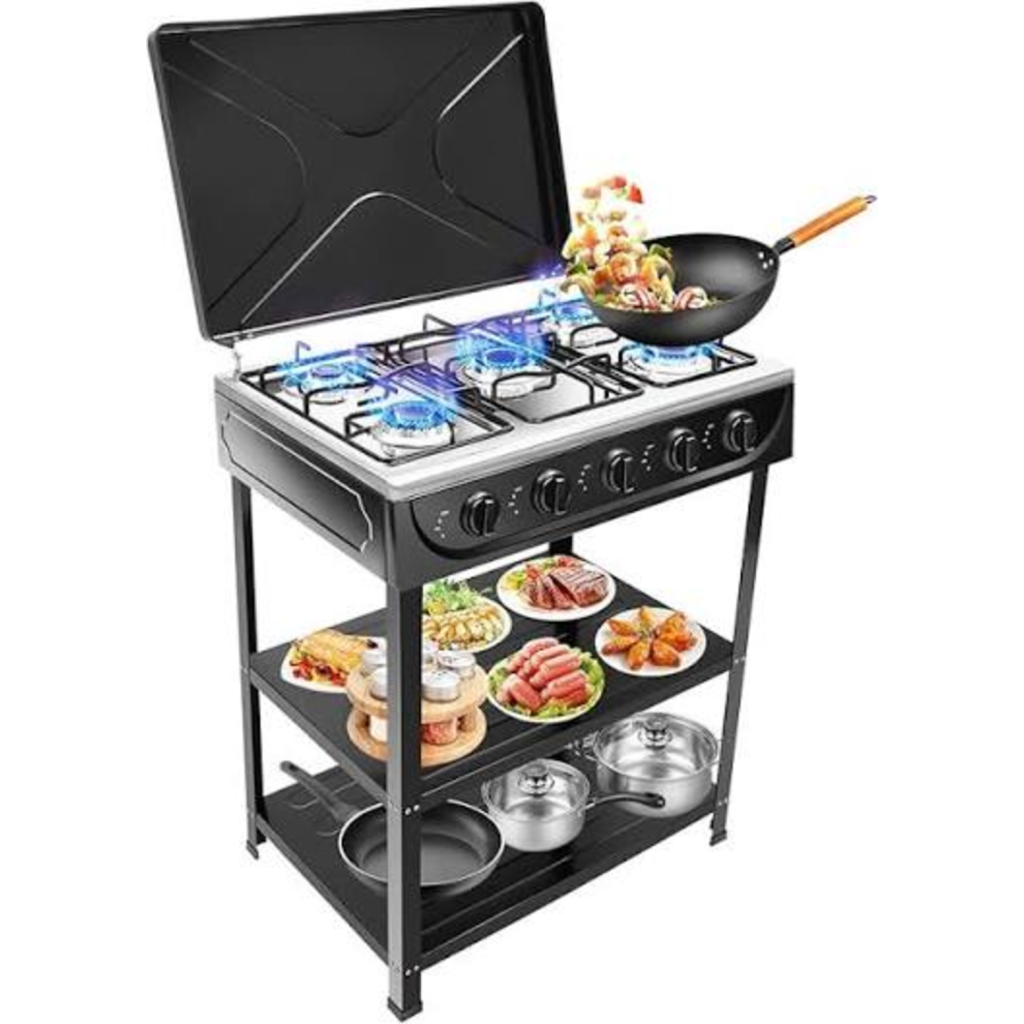
LP Gas Ranges vs. Natural Gas vs. Electric
| Factor | LP Gas Ranges | Natural Gas Range | Electric Range |
| Fuel source | Tank for propane on-site | Piped utility gas | Grid electricity |
| Works off-grid | Yes | No | No |
| The cost of an appliance in the beginning | Like NG models | Baseline | Similar to, or slightly lower |
| Fuel logistics | Requires tank delivery/refills | None — continuous supply | None |
| Works during power outage | Yes (pilot/piezo models) | Yes | No |
| Best fit | No gas main rural RV, off grid | Gas utility service in areas | Anywhere that has reliable power |
The easiest method of thinking about it is: if the gas main is already connected to your home, make use of it. If not, then propane is the lp gas ranges cooking alternative, while electric is a non-combustion option.
Types of LP Gas Ranges
- Freestanding is the most popular configuration, with side panels that are finished. Available in sizes of 20”, 24”, 30”, and 36” dimensions.
- Slide-in — slides flush between counters for a sleek design, no edges.
- Drop-in is a piece of furniture that sits on a base cabinet that has no drawer underneath for storage.
- Dual-fuel gas cooktop that is paired with an electric oven. The cooktop needs LP compatibility.
- Commercial-style Higher BTU burning units (often 15,000-22,000 BTU) continuous cast-iron grates with professional appearance and feel.
- Mobile-home and RV ranges that are compact, generally 17 “-21” large, but sometimes equipped with battery ignition specially created to not drain the solar battery.
- Convertible models for NG/LP are sold as units of natural gas, with an accompanying conversion kit to allow the conversion of field units to propane.
What an LP Gas Ranges Actually Costs?
Pricing is largely based on the size, burner count, and features such as the self-cleaning feature or convection. Based on current listings from retailers, here’s an accurate breakdown:
| Range Tier | Typical Price (USD) | What’s Included |
| Budget Freestanding (20″-24″) units | $600 – $1,200 | Use basic controls when operating four burners simultaneously. |
| Freestanding in the 30″ range. | $900 – $1,800 | Self-clean burners with optional convection capability |
| Commercial-Style (30″ to 36″) | $3,000 – $8,000+ | High BTU burners with continuous grates. |
| RV/mobile home compact. | $400 – $900 | Small Footprint and Three Burners. |
| LP conversion kit | $20 – $80 | Springs and orifices to regulate regulators. |
It’s not all there is, but it’s a start. Consider the cost of propane tanks ($50-$300 for a 20-pound tank or $500-$2,500+ for a fixed tank that is installed), professional hookup and installation ($150-$500), as well as the conversion process if you’re not doing the work yourself ($75-$200). Prices vary depending on the region and the country, so it’s best to inquire about estimates from two local vendors before you commit to purchasing propane or LPG appliances are particularly variable depending on the market, so you should treat these numbers as a U.S.-centered base instead of a global average.
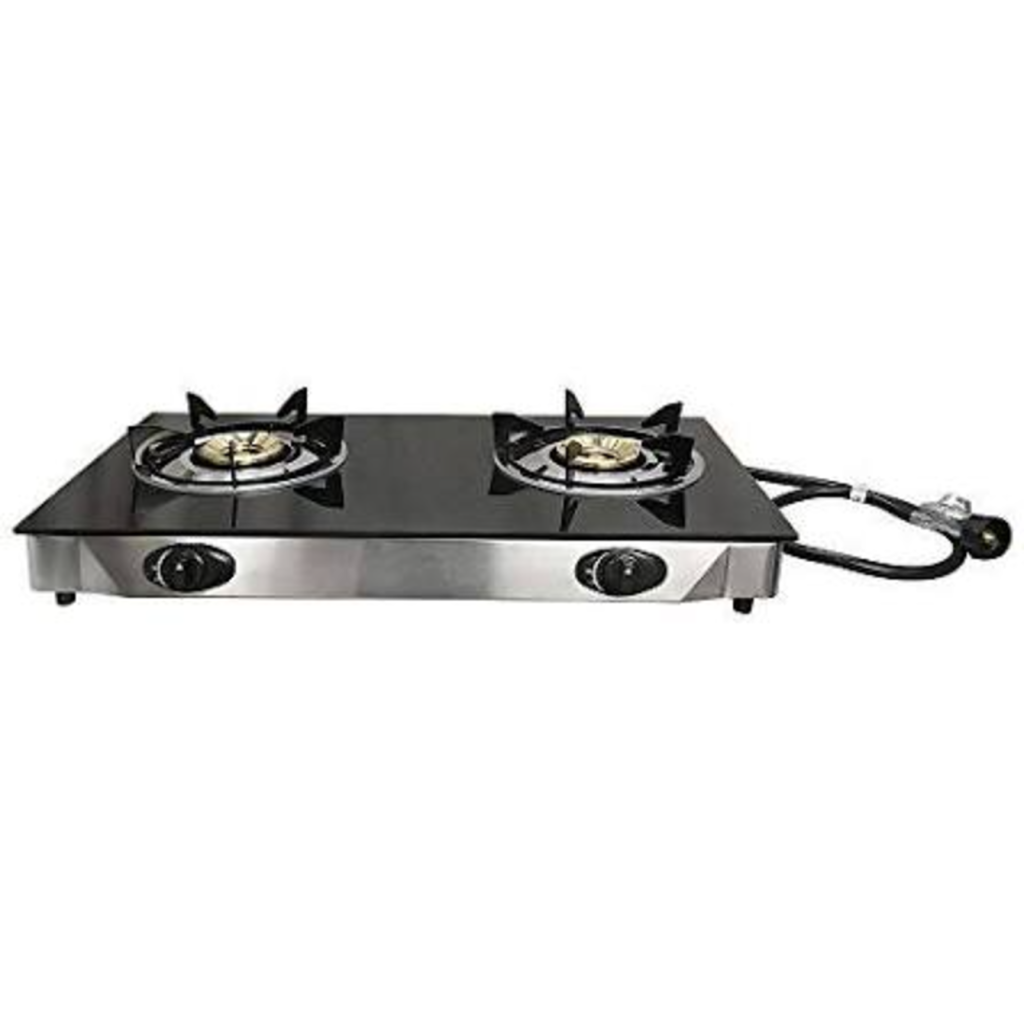
Converting a Lp Gas Ranges to Propane:
This is among the most frequently asked questions about this subject, which is not surprising. Many ranges are sold as natural gas units that come with an LP conversion kit included, and conversion is usually simply a matter of executing the correct steps instead of purchasing a new appliance.
How do you convert a gas range into propane:
- Review the owner’s guide or the rating plate to verify that the model can be converted. Not every model allows it.
- Switch off the gas, and then unplug the range.
- Order the manufacturer-specific conversion kit for your exact model number.
- Replace the burner’s orifices (often known as “spuds”) on every burner, including the oven’s burner, by using the smaller ones that are LP-sized from the kit.
- Adjust or replace the regulator for pressure — the majority of ranges utilize the spring-loaded regulator, which needs to be replaced with the LP’s eleven” W.C. setting.
- Connect everything and test each joint using a certified leak-detection solution, but never any flame.
- Check the flame by lighting the burners. Clean blue is a good sign, while orange or yellow indicates it’s not.
- Adjust the shutters on the air in the event that the flame isn’t completely blue.
- A licensed technician should inspect the work, specifically for insurance and warranty purposes.
One thing to know: If your range has an adjustable valve that has fixed high, medium, and low settings instead of the endless (fully variable) valve, the settings are held by the holes designed to accommodate the original fuel. Following conversion, “high” can end up being read more like “medium.” This isn’t a risk on its own h; however, it is the reason why some ranges that have been converted feel less powerful when they are at their highest setting, regardless of whether everything else was correctly done.
DIY in comparison to. Professional Conversion:
| DIY Conversion | Professional Conversion | |
| Cost | Kit for only (~$20-$80) | Kit and labor ($75-$200) |
| Speed | You can be quick If you’re skilled | It is scheduled based on technician availability |
| Warranty | It could be void if it is not certified. | Usually, the warranty remains intact |
| Risk | Leaks or malfunctions in the regulator could be a cause. | Leak testing is done using the correct equipment |
| Best for | DIYers can be confident with the exact kit and instruction manual | If you are unsure, or unsure of the location, the manufacturer has a requirement for certification for installation |
A lot of manufacturers require that a certified technician be employed for warranty protection to continue, so it’s a good idea to check the specifics of your model’s warranty before deciding which route to follow.
Installation Codes and Safety Requirements:
Within the U.S., LP gas range and propane system installation is usually controlled by NFPA 54 (the National Fuel Gas Code), NFPA 58 (the LP Gas Code), and ANSI Z21.1, which certifies the use of lp gas ranges cookers in homes specifically. Local fire and building departments also have their own permits and inspection requirements in addition to these.
Outside of the U.S., the same function is performed by various organizations, for example, AS/NZS 5601 for Australia as well as New Zealand, and BS 5482 along with IGEM norms within the UK. If you’re planning to install outside the U.S., confirm with the local authority instead of thinking that NFPA/ANSI is applicable.
A few basic installation rules that are frequently overlooked:
- The gas line must be correctly sized for the total BTU load. An unfit line can cause pressure drop.
- A shutoff valve must be placed and easily accessible close to the appliance.
- The connector’s flexible design is required to be certified for use with LP.
- The propane tank needs to be set back at the distance that is required by local fire codes, far from windows, doors, or ignition points.
- A majority of codes and manufacturers require an anti-tip bracket. It’s among the most frequently neglected safety measures — especially when a range is taken away for cleaning and then never put back in place.
Safety Risks Worth Taking Seriously:
Propane is heavier than air, which means it’s not as simple to disperse a leak, and it may collect near the floor within a closed space. This is why leak protocols are more important when dealing with propane than natural gas.
A few practical safety practices:
- Set up carbon monoxide detection devices in proximity to but not directly over the range.
- You should have a fire extinguisher equipped with the safety rating suitable for cooking fires.
- Do not store propane cylinders in or in a place that isn’t ventilated.
- If you notice gas, you should not switch off your appliances or ignite anything and call your propane company’s emergency number or fire department from outside.
- Propane has a strong odor. Make sure that the connections for gas pipes and the regulator are checked annually.
Propane is an odorous chemical specially formulated to ensure leaks are easily identified through the smell. However, strong cooking odors or nasal congestion can obscure it. That’s precisely why CO detectors are only a backup option, not a replacement for a proper leak-testing procedure at the time of installation.
How to Choose the Right LP Gas Ranges?
A couple of questions help narrow it down to a point quickly:
- Do you really need LP gas ranges, and is natural gas readily available? If there are no gas mains in the area, LP gas ranges is your only gas-cooking option.
- Purchase factory-LP gas ranges or purchase natural gas using the converter kit? Factory LP gas ranges models eliminate the risk of conversion. The kit can also save you money if you’re able to arrange an appropriate conversion.
- What size will suit your family? A 20 “- 24” range with four burners is suitable for three to four people; a 30” range with convection suits a family that cooks and bakes regularly; 36” + commercial-style models are ideal for serious cooks at home.
- Which size of tank do I need? Cooking-only use is typically covered by a 100-lb container for months at a time. If the tank also supplies water heating or heating for heating systems, then your propane provider will need to determine the size of a fixed tank based on household use.
- Have you planned for installation, and not just your appliance? Add $150-$500+ to the price for hookup, conversion, and inspection.
At minimum, get two estimates from installers and propane providers before making any decision. Service reliability and pricing differ by the provider, more so than people would expect.
Mistakes to Avoid:
- If you purchase an NG-only range that has no conversion kit to convert it and then attempt to operate it using propane in the end.
- Not doing leak-testing professionally following the DIY conversion.
- It is easy to ignore a constant flame, either orange or yellow, rather than having it checked.
- The gas line should be sized to match the entire BTU rating.
- Inadvertently removing the bracket that prevents tipping after moving the distance.
- In the assumption that all gas ranges are convertible, some don’t.
- The propane tank should be sized to the stove by itself, not noticing other propane appliances that are on the property.
FAQs
1. Do all lp gas ranges need to be converted to propane?
Not always. Many ranges include a manufacturer-approved LP conversion kit, but some models are built for natural gas only with no supported conversion path — check the owner’s manual or rating plate first.
2. What is the cost to convert your lp gas ranges in to propane?
Conversion kits generally cost between $20-$200, with an additional $75-$200 for cost of labor if you contract the service. Many new ranges include the conversion kit for free.
3. Do propane costs more than natural gas to cook with?
Generally yes, per unit of energy, propane is typically more expensive than natural gas that is piped. But cooking represents a small portion of the total use of propane in households when compared to water heating and heating. heating.
4. Can lp gas ranges operate with no electric power?
Standing-pilot and piezo-ignition models can run and light without electricity. Electronic ignition devices generally require power to start the ignition. Some models, however, permit light-up by hand. Read through and understand the instruction manual that pertains to your model of choice.
5. Which size of propane tank will I need to cook my stove?
To cook the 100-pound tank will last for months in an average family. When the tank is used for water heaters or heating, the propane provider should make a bigger fixed tank according to the total BTU demand.
6. What can I do to determine whether my stove is set to work with natural gas or propane?
Check the rating plate — typically within the drawer that stores your food and on top of the panel. Your manifold pressure gauge should clearly display either “NAT” or “Lp Gas Ranges” along with any required changes for either.
7. Can I safely convert my gas stove to propane myself?
Basic hookup with an approved connector is typically at the level of a homeowner’s skill; however, the orifice swap and leak test at the beginning should be done by a certified technician. A lot of manufacturers require this for their warranty in force.
8. What is a yellow flame in the range of propane mean?
It usually points at a burned-out burner due to an insufficient orifice size as well as an unclean burner port as well as an air shutter which needs adjustment and needs to be repaired instead of being ignored.
9. Why doesn’t my propane burner remain in flame?
This is almost always a flame-sensing or thermocouple safety valve problem. It’s designed to stop gas flow when it fails to detect a flame. So the thermocouple that is worn or not aligned can shut off the burner regardless of whether everything else is in order.
Conclusion
An Lp gas ranges gives you the same fast, high-heat cooking capabilities as natural gas ranges and without the need for an energy mains -this makes it the ideal option for rural homes, including off-grid homes, mobile homes, and RVs. The most important details are those that are often overlooked: making sure that the model can be converted, as well as planning for the tank’s installation of the appliance and having any leaks that result from conversion tested by someone competent, rather than simply assuming that it’s okay simply because the flame has been lit.
Suppose you’re just starting and are not sure if natural gas can reach your property. If not, choose a factory LP gas ranges option and a natural gas appliance equipped with a conversion kit. Make sure you match the tank and range according to the actual needs of your household, and request estimates from several local installers before you make a decision.
These information about Lp gas ranges are gathered from different surveys, medical tests and tech giants like Reviewed and more. Our top priority is to provide you valuable information about Lpgas ranges.
For More Details About Different electric stove Click Here.