Handheld Massagers Explained: Types, Safety Features and How to Select One
If your shoulders remain restricted from a job at the desk or your calves have been damaged from a leg workout, a handheld massager could make the difference between slogging through your week and recuperating. The market for massagers is quite crowded, including percussion guns, oscillating wands, shiatsu kneaders, and heated models, but picking the wrong one is likely to result in it ending up being tossed into a drawer after one month.
This article explains the functions of these devices, what they do, the best type for your situation, how you can utilize one without harming yourself, and what an acceptable budget will look like by 2026.
What Is a Handheld Massager?
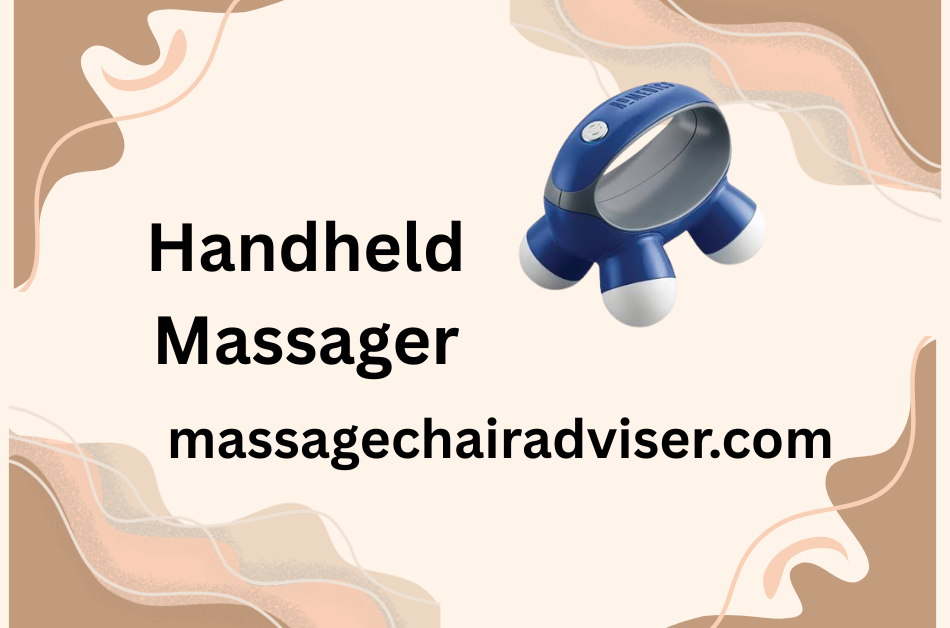
A handheld massager is a mobile motor-driven device that delivers the force of percussive strikes or rotational pressure to muscles. It is designed to be self-massaging -that is, you can hold it in your hand and massage it on painful or tight spots yourself instead of lying down to enjoy a professional massage.
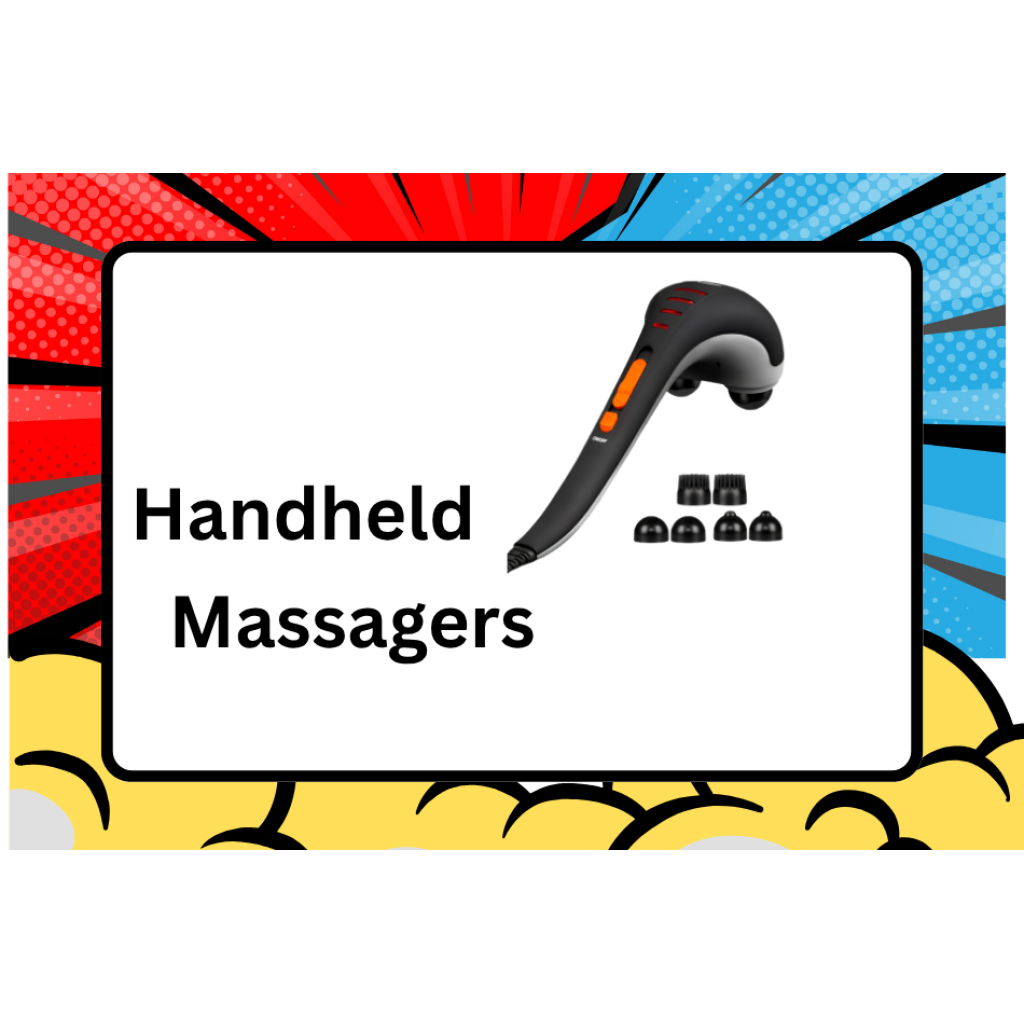
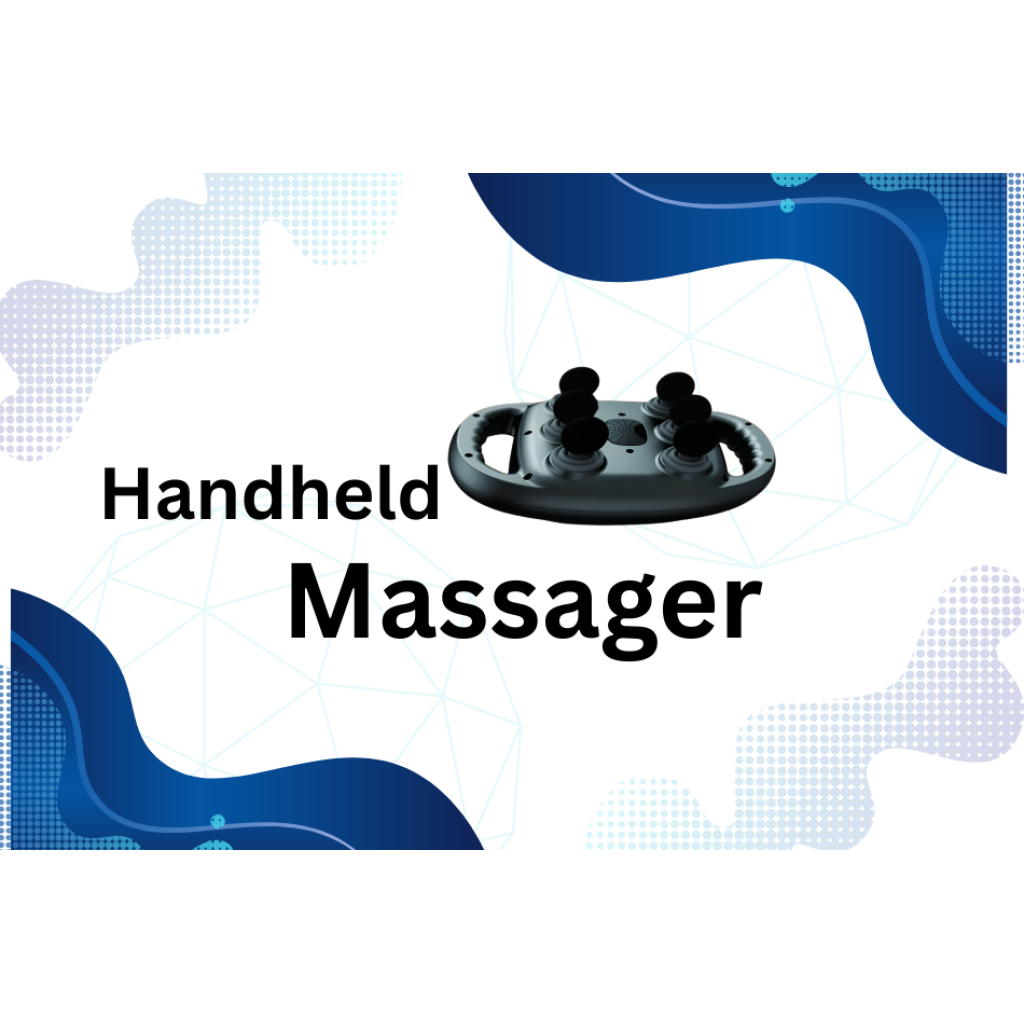
The class includes a range of techniques: massage guns that deliver powerful punches into the tissue, vibration wands that pound the skin, and shiatsu-style devices that rotate nodes to replicate the thumbs of a therapist. A few add cold or warmth to add a second feature.
Why People Reach for One Handheld Massager?
It’s all about the convenience. A handheld massager can be placed inside a backpack or desk drawer. It can provide relief upon demand, with no need to make an appointment or pay the cost of a session.
Commonly, regular use is connected to:
- Relaxing muscles, loosening them, and relaxing knots and trigger points.
- Improved blood flow in the short term to an area of soreness
- Relaxing muscles prior to or after exercising
- Helping to ease tension from stress in shoulders and neck
It’s important to be honest about the limitations, however. The devices are based on soft tissues. They’re an instrument for maintenance, but not an alternative to rehabilitation when you have underlying damage or a diagnosed issue.
Who Should Use Handheld Massager (and Who Should Be Careful)?
Excellent fit
- Regular gym users and athletes who deal with muscle soreness that has delayed onset (DOMS)
- Workers at offices with tight necks and shoulders due to the long hours they spend at their desks
- Anybody who is dealing with stress-related muscular tension
Make sure to use it with care and consult your doctor before using:
- Patients with an implanted pacemaker or other device.
- Anyone who is suffering with deep vein thrombosis, or a clotting disorder, or who takes blood thinners.
- Patients with severe osteoporosis who have recently fractured their bones or surgeries in the past.
- Women who are pregnant, especially in the abdominal region and the lower back.
- People who experience numbness or diminished sensation, which includes some instances from uncontrolled diabetes.
If you’ve suffered a recent injury or strain, keep on. Massage devices for a new injury could increase pain and swelling and not improve it. This is one of the most frequent mistakes made by people using the devices.
The Main Types, Compared:
| Type | How It Feels | Best For | Typical Price |
| Percussion massage gun | Punching action that is rapid and deep. | Muscle recovery, athletes, deep tissue soreness | $60-$600 |
| Handheld massager with vibrating vibration | The surface of the glass is buzzing gently | Releasing, tension and light user who is sensitive | $20-$80 |
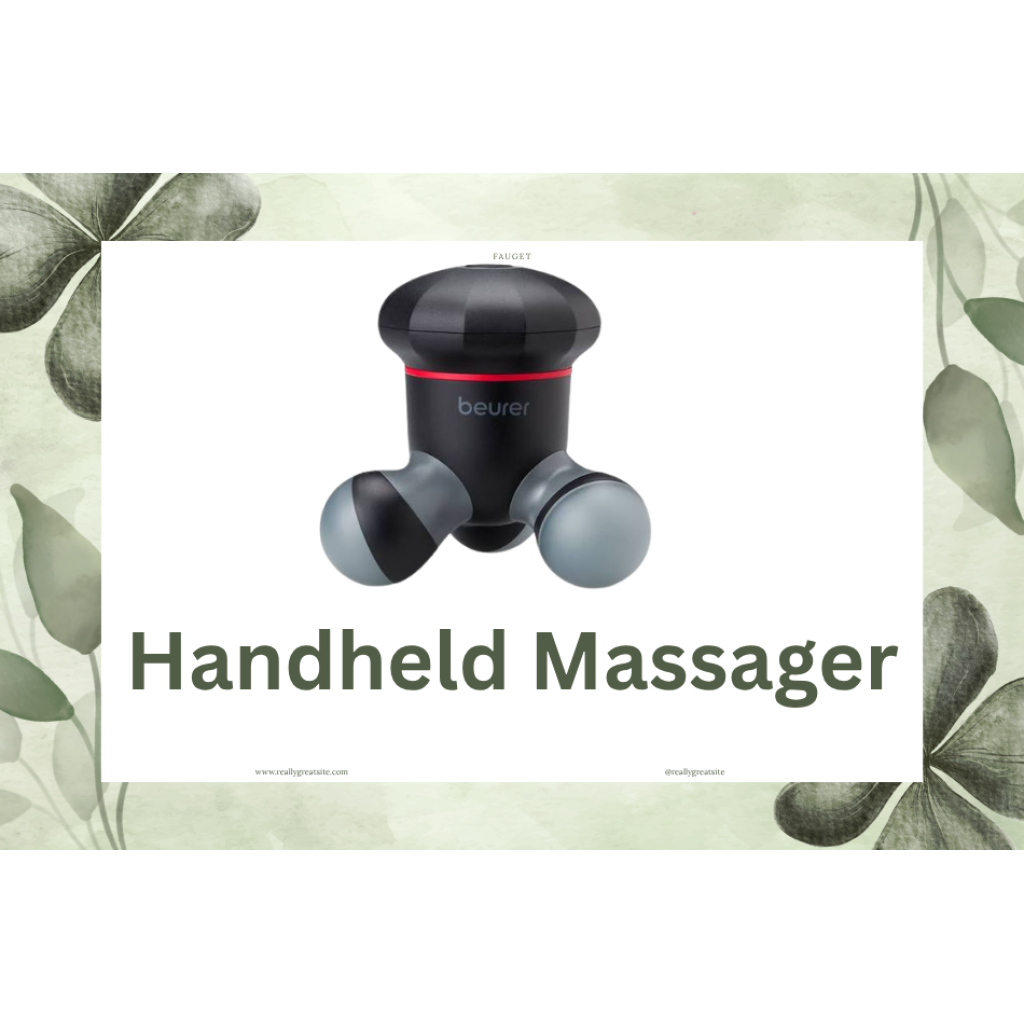
| Shiatsu handheld massager | Nodes rotating, feeling kneaded | The knots in the neck and shoulders and chronic tightness | $30-$150 |
| Infrared/heated handheld massager | Vibration, warmth and vibration | Stiffness, achy or cold joints, joint pains that are associated with arthritis | $40-$120 |
| Mini/travel massage gun | Compact Percussion | Gym bags, luggage and on-the-go touch-ups | $30-$100 |
The primary distinction between a massage gun and a simple vibrating handheld massager lies in depth. Massage guns’ percussive in-and-out motion penetrates deeper into the muscles, whereas those that use vibration only tend to work on the top layer. This is why massage guns tend to feel more intense; that’s why they’re the preferred choice for after-workout recovery, whereas vibration and shiatsu devices tend to be more preferred for relaxation and general use.
Matching the Device to the Problem:
Instead of trying to find “best overall” rankings, it’s better to focus on the root of your issue.
- Soreness after a workout or the recovery of athletics: A percussion massage gun that has a decent amplitude (10mm plus) and an effective stall force
- The desk-job neck and shoulder strain is a shiatsu massager or a gun for massage that has a rounded attachment. The lower setting
- General Stress Relief, delicate muscles, or for first-time users: basic vibration massager
- Chronic stiffness, cold joint pain. A heated massager to be used with, but not in lieu of, medical advice for ailments like arthritis.
- For frequent gym bag or travel use, it is like a mini Massage gun with a compact size and battery life.
If you’re purchasing a gift for another person — parents, partners, or even someone who is an athlete- making sure the model is compatible with their current routine is more important than selecting the most highly rated model from a retailer’s site.
How Handheld Massagers Actually Work?
A majority of these devices operate with a tiny electric motor.
- Massage guns that use percussion are able to drive attachment heads swiftly in and out, giving anywhere from 1,750-3,200 hits per minute. The longer your stroke (amplitude), the more it can penetrate muscle rather than just the skin.
- Massagers that vibrate spin an off-center mass in order to produce a buzzing sound that is effective for superficial relaxation but not so much for deep tissues.
- Shiatsu Massagers utilize paired, rotating nodes, which mimic the therapist’s Kneading method, which is why they’re different from a gun or vibrator.
- Massagers that are heated include a warming component to help relax the tissue and enhance comfort when any percussion or other vibrations are applied.
Two factors are more important than the claims of marketing: the amplitude (how far the stroke extends and is measured in millimeters) and the force of stall (how many watts of resistance the motor is able to handle before it stops). More numbers usually indicate better equipment for deep tissue work; however, it also means more noise and higher cost.
How to Use One without Hurting Yourself?
- Begin by warming up — A short stroll or warm shower should make your tissues responsive to stimulation.
- Start on the lowest setting, gradually increase it as necessary, then gradually increase its intensity.
- Ensure the device remains moving – don’t leave it stationary for more than 15- 30 minutes in any location.
- Keep your focus on the muscle and avoid any pressure that is direct on the spine, joints, as well as bony regions. These devices were developed specifically for muscle and not for nerves, bone or joints.
- The muscle groups you should limit by no more than 1 to 2 minutes in a session of exercise.
- Drink plenty of water post-event to improve circulation.
- Stop immediately if experiencing intense pain, tingling, or any numbness-like sensations-do not attempt to alleviate them yourself, as this could be harmful and should only serve to worsen them!
An acceptable rhythm for healthy adults is to exercise with short intervals, not one lengthy session. If you’re not sure if your area that you’re trying be treating is affected particularly after an injury that occurred recently. It’s best to speak with your physician prior to making any decisions.
What to Expect on Price Of Handheld Massager?
Pricing is closely linked to engine power and features.
- Basic vibration handheld massagers: approximately $15 to $40
- Handheld Massagers using Shiatsu: roughly $30-$100
- Basic massage guns: roughly $60-$120
- Medium-range massage gun: roughly $120-$250, typically with several attachments, as well as applications.
- Massage guns can be purchased for a premium price: roughly $250-$600, typically fitted with pressure sensors as well as help with clinical research
As a rough estimate the typical massage costs between $65 and $150, based on the kind of service as well as the place of service.
This is a significant element of why portable devices are getting more and more popular because they are a low-cost, repeatable option to maintenance routines. Prices vary based on location and the retailer. It’s suggested to consider the variety of local and regional options irrespective of whether it’s a big-box electronic retailer, a drugstore or wellness center or an online retailer and not assuming that the same number applies to everyone.
Common Mistakes Worth Avoiding
- Then, jump straight to the maximum intensity setting
- It is positioned directly over the neck, spine, or joint
- Applying it to a new wound, area of numbness, or surgical area
- Working one muscle group at a time during a single workout
- The choice of a gadget should be based only on the percussion speed, not focusing on amplitude or stall force
- Not following the storage and charging instructions reduces the battery’s lifespan over time.
Handheld Massager vs. the alternatives
| Option | Strength | Trade-off |
| Massager hand-held | On-demand, targeted, cheaper over time | Do the work yourself |
| Massage chair | Hands-free, full-body | The price is high, and it’s not portable. |
| Foam roller | Affordable, great for big muscles | More physical, less precise effort |
| Massage therapists who are professionals | Fully customized, trained technique | Costs more per visit, needs scheduling |
| Physical therapy | Medical-grade, condition-specific | Sometimes, a referral is required. more expensive |
There is no way to replace other products completely. Most people wind up with a handheld massager for routine maintenance and visit a specialist regularly to deal with more significant issues.
FAQs
Can you utilize a handheld massager throughout the day? For most healthy adults, yes, provided that sessions remain shorter (about 1 to 2 minutes for each muscle section) and intensity remains low. If you are suffering from an underlying health issue, consult a physician before you begin.
Does a handheld massager assist with sciatica? It may ease tension in muscles surrounding the area affected; however, sciatica itself is a nerve problem, not an issue with muscles, and therefore a handheld device will not address the root cause. If you suffer from sciatica, you should be examined by a physician.
What’s the main difference between a masseuse and an oscillating masseuse? A massage gun uses rapid percussive strokes that penetrate into the muscle tissues, and vibration massagers move in the upper part of the muscles. The latter is generally more effective for treating deep soreness, while vibrations are more gentle and suitable for light relaxation.
Do handheld massagers inflict nerve injury? Used correctly -massages on muscles with a moderate amount of pressure and without being confined to one location — the likelihood is minimal. Most problems arise from applying them directly to joints, nerves, or bony regions and applying excessive pressure for a prolonged period.
Are massagers on handhelds safe when pregnant? Only with a medical professional’s approval, and avoid the lower abdomen and back. There are some pressure points that can be linked with contractions. So it’s not something you should try yourself.
What is the length of time an actual session takes? Roughly 1-2 minutes for each muscle is an acceptable start. A longer duration doesn’t mean better, and may increase the likelihood of soreness or bruising.
Do massagers with handhelds really perform their job, or are they mostly a placebo? They’re genuinely effective to help with muscle relaxation for short periods or tension reduction, as well as short-term improvements in blood flow. It’s not a solution for long-term conditions, but it’s useful to ease post-workout tightness or soreness; the effects are evident and are well-documented anecdotally, as well as through standard medical explanations of the ways that percussive or vibration treatments affect muscle tissue.
Are handheld massagers suitable for gifts? Yes — they’re among the most useful gift options for desk workers, athletes, or any other person who is known for feeling sore frequently. Shiatsu and mini massage guns neck massagers can be the most reliable gifts because they can be used by a broad range of individuals.
Getting Started
The best handheld massager is not so much about how well a brand is regarded and more about matching the model to the way you use it -the recovery-oriented percussion that athletes need, as well as softer vibration or shiatsu for daily tension, and also heat-infused options for stiffness that doesn’t appear to be easing.
Whichever method you pick, fundamentals of safety remain the same: start low, keep your device moving, keep it away from joints and bones, and stop whenever you sense something’s odd. When used in this method, a handheld massager is an easy and low-cost option to add to your treatment routine, but it’s not an alternative to expert care when something grave is happening.
These information about Best handheld massagers are gathered from different surveys, medical tests and tech giants like Reviewed and more. Our top priority is to provide you valuable information about Best handheld massagers .
For More Details About Different massage chair Click Here.