Upright Freezers freezers: The Complete Buying Guide for Every Size, Budget, and Space
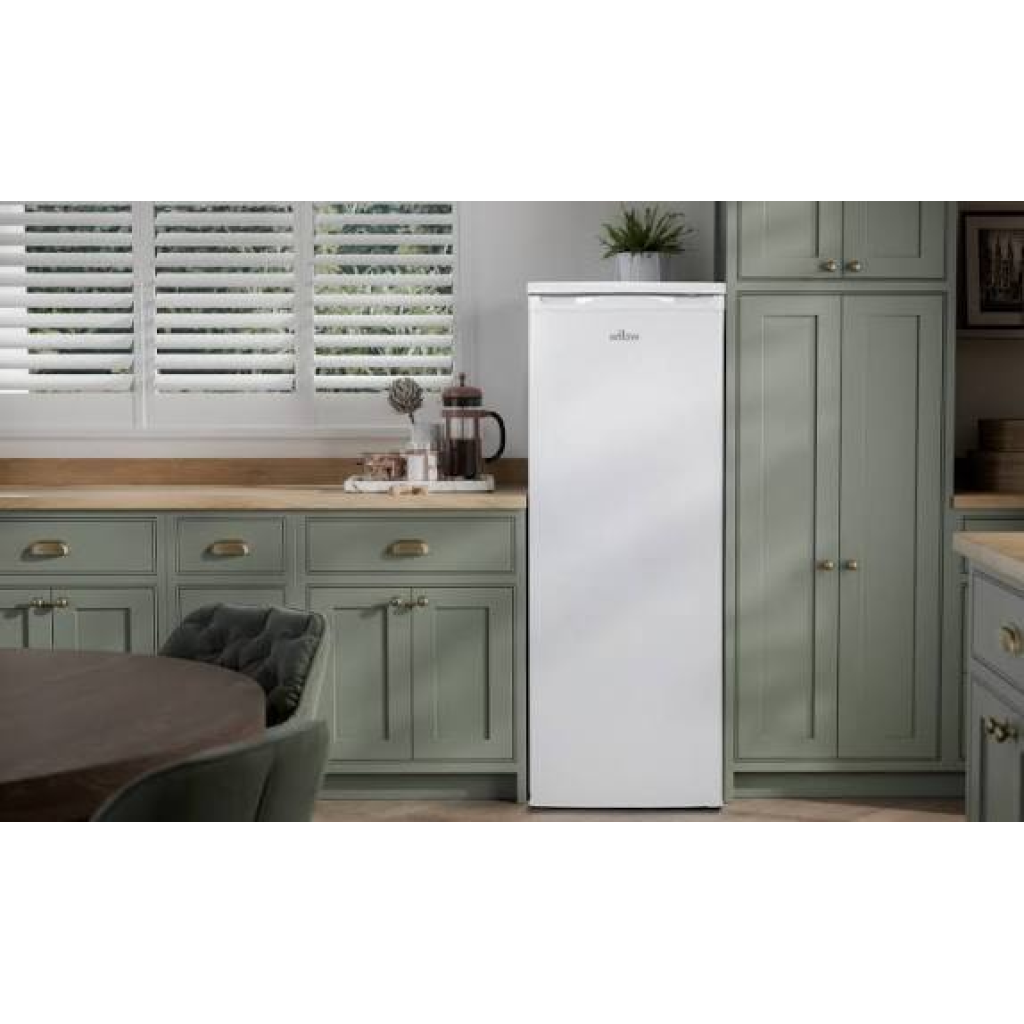
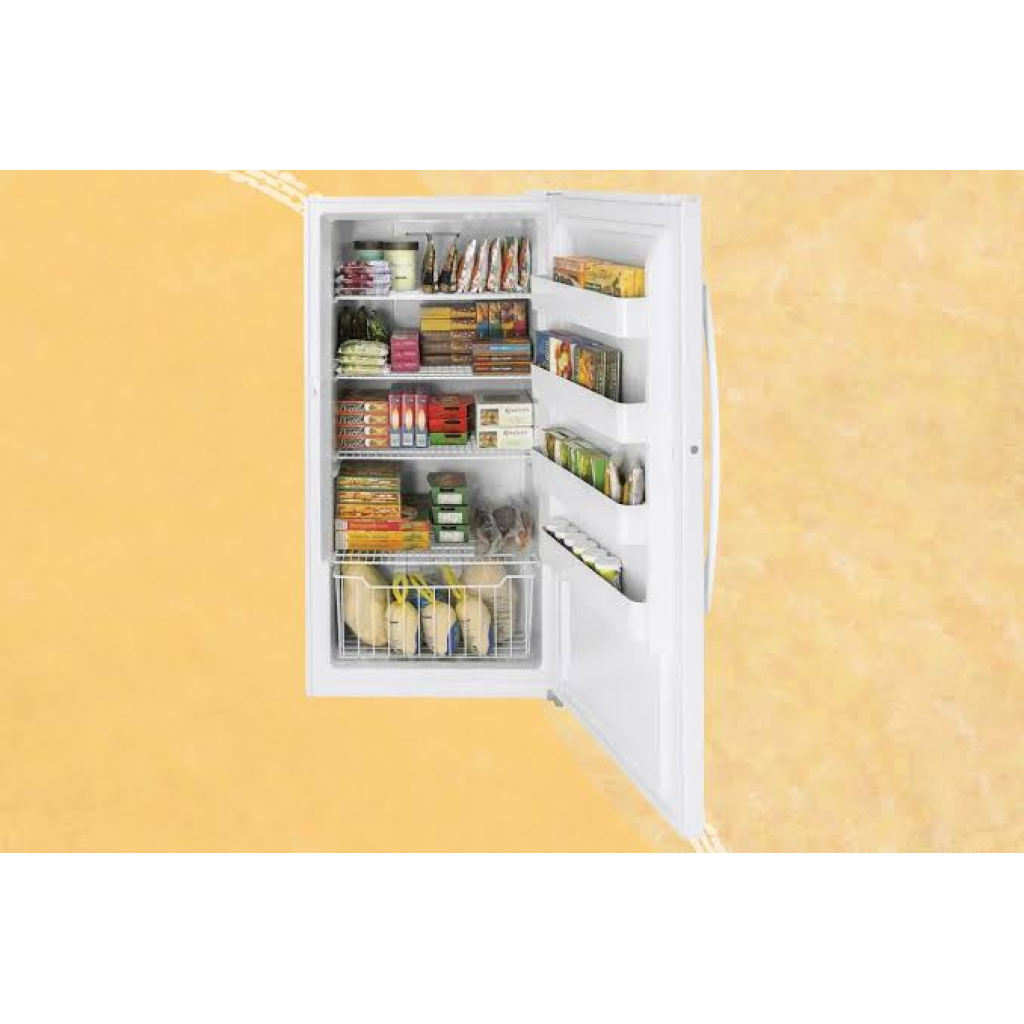
An upright freezers freezers is described as a distinct vertically-built freezer that has shelving and doors which open from the front, similar to as refrigerators. It’s the best option for those who want to have more upright freezers freezers space without having to sacrifice the quick, simple management of a normal refrigerator.
If you’ve seen anyone standing at the front of a freezer, rummaging between three layers of frozen delicacies in order to discover a bag of peas and a bag of peas, you know the attraction. The upright freezers freezers trades a tiny amount of efficiency for a more substantial benefit in convenience, and for the majority of households, the trade is worth it.
This guide will walk you through all the information you need to know about size, dimensions, and how to purchase the best unit for your needs: capacity, defrost, cost, running costs, location, and the blunders that afflict first-time buyers.
Who actually needs an upright freezers freezers?
There aren’t many households that require an additional upright freezers freezers, but there are plenty of circumstances that warrant an easy reason to consider:
- Families that buy in large quantities: warehouse-club purchases, sales during the season, or meal-prepping during the week
- Anglers and hunters keeping the game and fish which will not fit into a freezer for the kitchen.
- Gardeners are freezing their produce harvests before they begin to spoil.
- Small-scale food companies and eateries needing storage space for excess food beyond their main walk-in units or reach-in units
If you’re a part of one of these categories, the next step doesn’t concern how to purchase a product – it’s which one to buy.
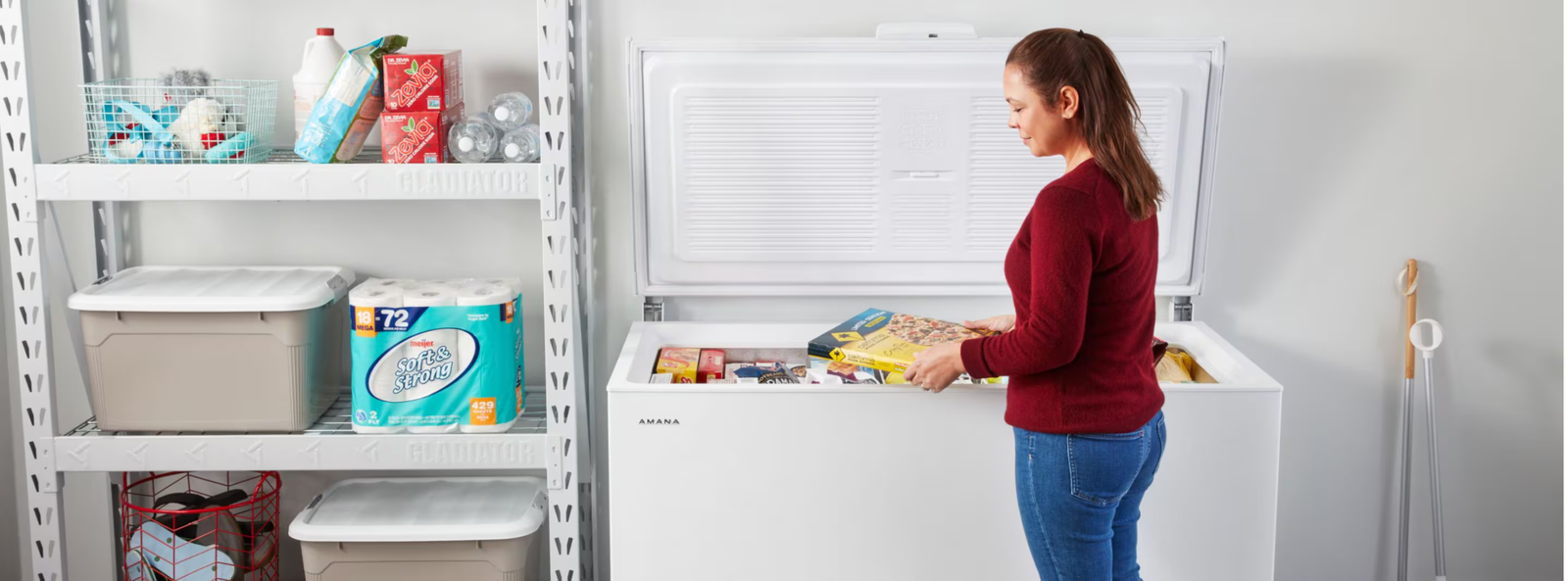
Upright freezers freezers in comparison to Chest Freezer: What’s the Real Difference?
This is the most frequent upright freezers freezers option and comes down to a choice between efficiency and organization.
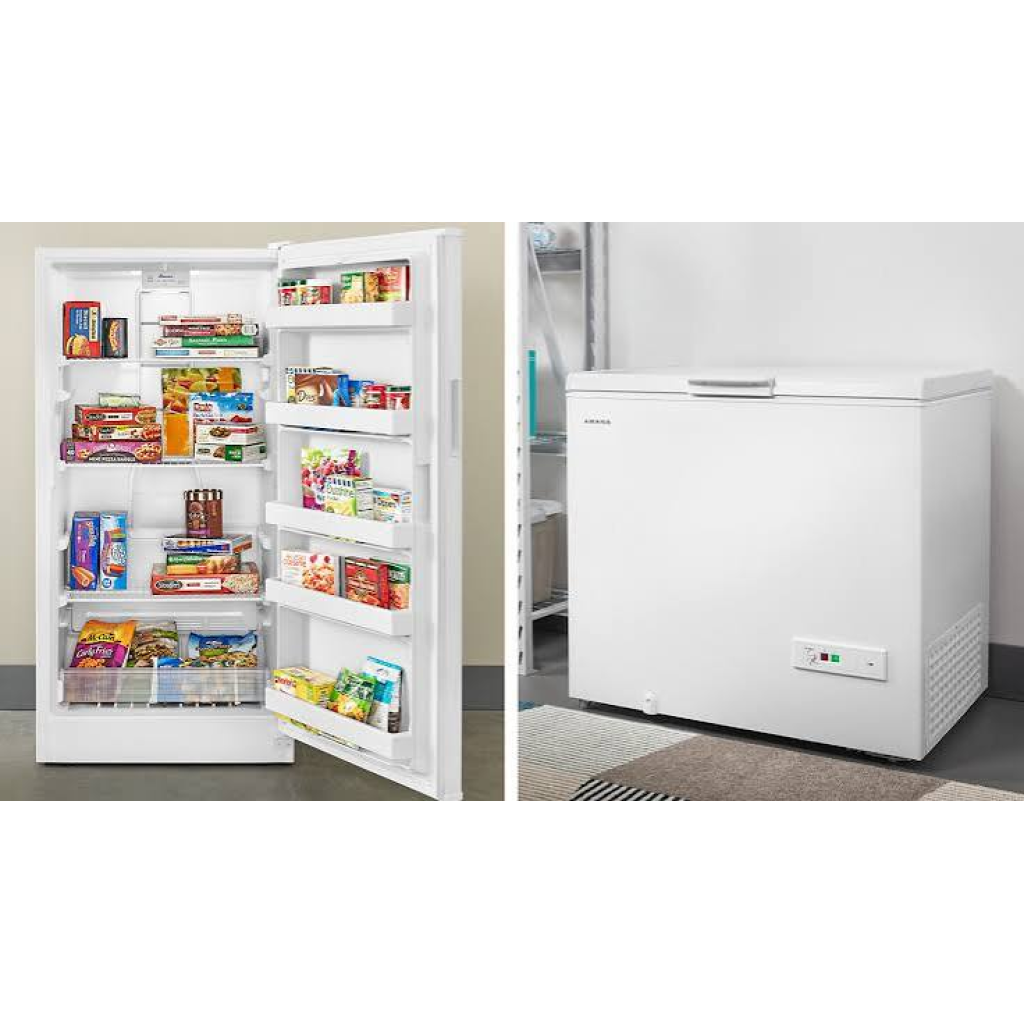
The upright freezers freezers appears and opens like a horizontal refrigerator, with shelves, bins, and occasionally drawers. Chest freezers open from the top and are in a low, wide space with one open space (sometimes separated by movable baskets).
| Factor | Upright freezers freezers | Chest Freezer |
| Floor space | Smaller footprint | Larger footprint |
| Organization | Bins and shelves, easy to find everything | Items are stacked over one another |
| Cost of running | Typically, the price is higher | Typically, lower |
| Retention of cold-air when opening | The cold air is sucked out quickly | Cold air is in the air |
| Resilience to power outages | The temperature rises more quickly | Keeps cold for a longer time |
| Options to defrost | Widely available Frost-free | The majority of manual defrost is done |
| The typical price range | Roughly $450-$2,100 | Roughly $170-$1,200 |
Independent lab tests have found that upright freezers freezers tend to be priced higher than chest freezers. This is largely because each door’s opening lets cold air flow down into the ground. The same tests revealed an increase in temperature for upright freezers freezers within nine hours following the power going out, which chest freezer owners living in areas that are prone to outages frequently consider a major factor in determining the cost.
Short version is: If you are able to access food often and need to know what you have at a glance, then an upright freezers freezers advantages usually outweigh the gap in efficiency. If you’re storing huge bulk items that aren’t touched often, like the equivalent of a quarter of beef, or a whole season’s worth of venison, the efficiency of a chest freezer and endurance to outages may be of more interest.
How Big of an Upright Freezers Freezers Do You Actually Need?
It is the place where buyers either overspend or are under-buying. A common guideline is 1.5 to 2.5 cubic feet per family member. However, the actual use habits of your household matter more than the formula.
| Household or Use Case | Suggested Capacity |
| A couple of people, minimal use | 5-7 cu. ft. |
| Family of a small size (3-4 people) | 10-16 cu. ft. |
| Bulk buyers or large households | 17-22 cu. ft. |
| Gardeners, hunters, seasonal stockpiling | 17-25 cu. ft. |
| Small food or restaurant business | 20+ cu. feet. and sized to the volume of inventory that is needed |
A helpful tip that you can borrow from commercial kitchens is to calculate the amount you’ll need in the near future and add a 20 percent buffer capacity. The buffer doesn’t have to be to accommodate future growth, but an overstocked upright freezers freezers aren’t able to allow cold air to circulate, which makes it harder for the compressor to work and could create warm spots.
In fact, it’s the exact opposite of what you’ll usually get from home upright freezers freezers, in which keeping the upright freezers freezers about 75% full is a good idea since frozen food items serve as frozen ice cubes, which help the appliance maintain the temperature when doors are opened. Both of these suggestions are true, and they’re just applied to different sizes. A refrigerator in the home should be generally full, while a commercial one needs enough room to breathe in addition to its operational inventory.
Before buying, you should measure 3 things. The size of the room in which it will be placed and how wide any doors or stairwells it has to be able to pass through, as well as the distance behind the unit; the majority of manufacturers recommend at least one inch of space to ensure that the compressor is able to vent properly.
Frost-Free or. manual defrost: Which is Best for Your Lifestyle?
The decision you make will affect the routine of maintenance more than everything else in the upright freezers freezers.
Pros:
- There is no manual defrosting; the unit handles it all automatically.
- Less ice buildup over time.
- It is ideal for people who don’t require continuous appliance maintenance.
Cons:
- Makes use of more electricity than manual defrost models.
- Price is slightly higher for purchase.
- More prone to freezing burns on items that have been stored for a long time.
This last aspect is a surprise to many purchasers, so it’s worth discussing. Frost-free upright freezers freezers function by heating the interior a bit and circulating air to stop crystals of ice from developing on the walls. This air circulation dries out wrapped, loosely wrapped food items over time, which is precisely the reason upright freezers freezers burn happens. If you’re keeping products or meat for more than six months, it is crucial to consider the drying effect.
Manual Defrost:
Pros:
- Lower energy consumption.
- Lower cost of purchase.
- Cooler, more stable air with less circulation, ideal for storage over the long term.
- Less chance of freezer burn on items stored for a long time.
Cons:
- It is necessary to defrost manually when the buildup of ice is about a quarter-inch thick.
- It is necessary to disconnect the plug and empty the freezer during defrosting.
The real-world application: opt for frost-free options if you prefer low-maintenance convenience, and you make use of the upright freezers freezers for daily rotation of items. Make sure to defrost manually if you’re keeping food for a long time and want to reduce both the running cost as well as upright freezers freezers burn, and you don’t mind a few defrosting times.
A habit that is worth pursuing regardless of the method: sealing food with a vacuum prior to freezing drastically reduces the risk of freezer burn, regardless of the system for defrosting you decide to use.
Garage-Ready Freezers: Do You Actually Need One?
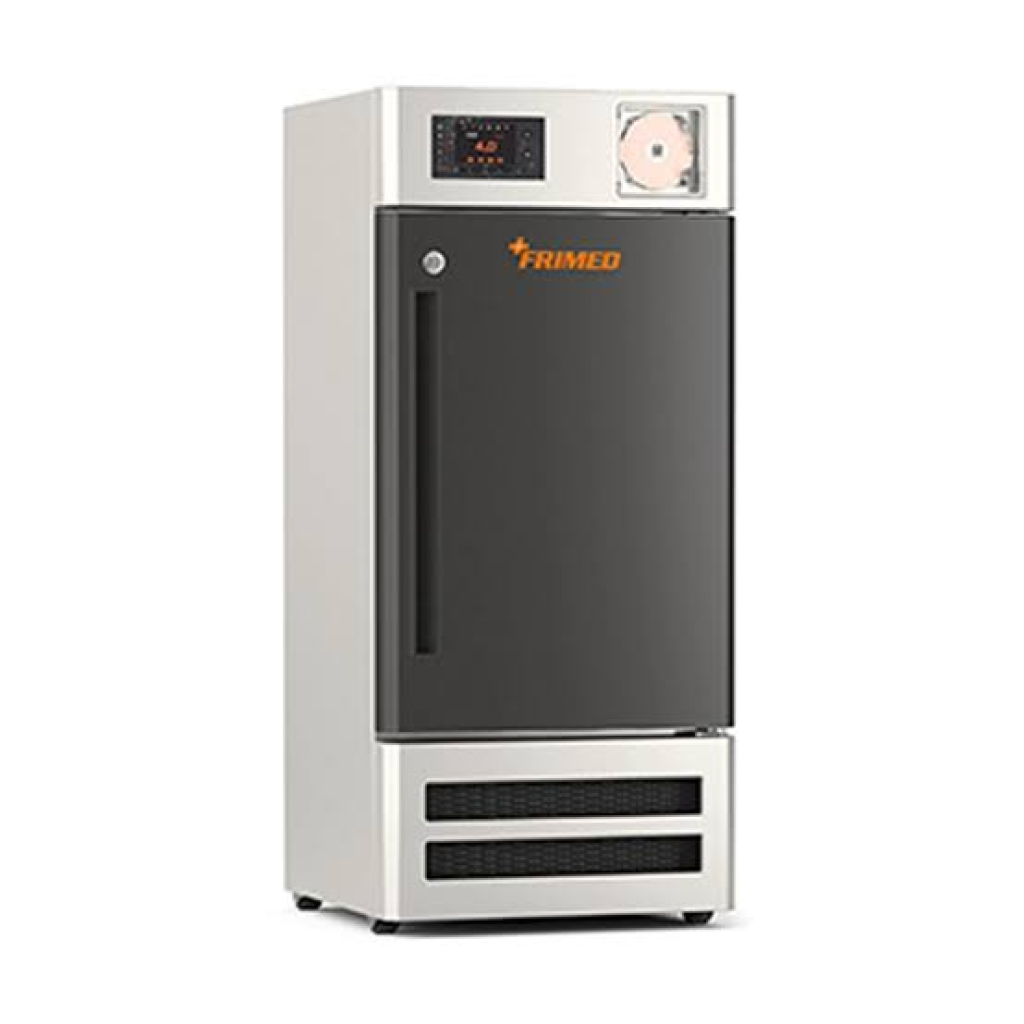
“Garage-ready” isn’t a marketing buzzword; it’s actually a functional specification. A standard freezer is built to operate in a temperature-controlled indoor space, typically between about 60degF and 90degF. A garage-ready upright freezers freezers is constructed with insulation and a compressor that are rated for a greater range of temperatures, usually stated as approximately 0°F- 110°F, depending on the model.
If you’re putting the upright freezers freezers in an inaccessible garage, porch, or even a shed- anyplace where it can be hot during summer but cold during winter- a conventional model might not function properly or end up failing in a hurry. A garage-ready freezer was built specifically for that type of swing, without stressing the compressor.
If the unit will be in a basement with a climate control system or utility room, the standard model will be adequate, and you won’t be paying for features that you don’t require.
What Features Actually Matter?
Beyond capacity and the defrost style, a few features can make a upright freezers freezers more enjoyable to use than one that’s an exercise in futility:
- Temperature control via digital: More accurate than an old-fashioned dial and easier to adjust to your needs.
- Wire shelving that can be adjusted lets you move items around to accommodate oddly-shaped objects
- Alarm for the door — warns you if the door has been open, preventing an expensive error
- Internal light is a real asset for garages and basements with dark walls.
- A door that can be reversed is a great option when your installation space is limited on one side
- A lock is worth a look for shared spaces, garages, or commercial settings
- Level of noise is more important when the upright freezers freezers is located close to an area of living instead of hidden away
What Will It Cost to Run?
The running costs differ based on size, defrost, and the local electricity rate. However, there’s real evidence of regulations behind this instead of speculation. In the US, the Federal Trade Commission requires an EnergyGuide label on all new freezers. The cost tables offer a realistic idea of the cost variation: a smaller manual-defrost upright with a capacity of less than 5.5 cubic feet can be valued to cost between $18 and $43 per year to operate, whereas larger models that are frost-free within the 19.5-21.4 cubic feet range are priced at around $101-$104 annually. Frost-free models generally sit above manual defrost units that are comparable in size.
Two simple levers influence that figure more than anything else on the specifications sheet. The first is keeping the unit full (not overfilled) and placing it in a place with adequate airflow around its sides and back.
In the event that you’re buying outside of the US, search for a regional equivalent. The EU Energy Label system and similar programs in other countries offer similar efficiency ratings, even though the exact size and cost estimates differ from those of the US EnergyGuide format.
Installation and Placement Checklist:
- You must leave enough room behind and adjacent to the unit for airflow. Read the manual. However, a minimum of 1 inch is acceptable.
- Make sure the floor is level. A freezer that is not level can stress the compressor. This can affect the seal on the door.
- Be sure that the unit’s temperature range is as wide as the area that you’re utilizing it in.
- Connect directly to a designated outlet. Do not use extension cords or connect to a circuit shared by other appliances that consume lots of energy.
- Keep it out of direct light sources, and keep it clear of sources like a dryer or furnace.
Avoiding Mistakes:
- Price alone is not enough to buy. A cheap, inefficient device can be more expensive in ten years than a more expensive and more efficient model.
- Skip the tape measurement. Upright freezers are large, and it can be difficult to navigate through narrow hallways and down the basement staircases.
- Not paying attention to the garage-ready specification in the event that the freezer will be in the garage.
- Filling up beyond the limit of airflow or leaving it empty to be able to maintain temperature effectively.
- The compressor is not under guarantee. Compressor failure is the most frequently encountered major repair to any freezer. A longer warranty on this particular component is worth more than a more extensive warranty overall.
Maintenance Basics:
- Defrost manual models before ice buildup passes a quarter-inch
- Clean the gaskets of your door regularly to ensure that they seal correctly.
- Vacuum all condenser coils accessible to you frequently
- Keep the inside at or below 0°F (-18degC), which is the accepted base for long-term, safe frozen storage.
- The stock should be rotated — move the oldest items to the front to minimize the amount of waste and burn in the freezer.
Local Buying in comparison to Online:
Major online marketplaces usually beat out the competition on price and variety, especially during the holiday sales. However, independent local appliance dealers typically offer what retailers can’t provide: personal guidance from the personnel who make these buying decisions on a daily basis, as well as bundles of installation, delivery, and haul-away of old units.
If you’re trying to find some “upright freezer near me,” it’s a good idea to compare at least two or three regional or local retailers instead of assuming that the first choice is the most affordable cost. Delivery charges or installation fees, as well as haul-away prices, differ significantly among suppliers.
Alternatives Worth Considering
- Chest freezer — more efficient and less cost per cubic ft, making it easier to manage.
- Under-counter or drawer freezer integrated into cabinets, less capacity, perfect for small kitchens.
- Upgrading to a combination refrigerator/freezer unit should always be considered even if separate storage capacity is no longer essential.
FAQ
1.Which freezer model should I select: upright or chest model?
Your selection depends entirely upon how it will be utilized. Choose an upright freezer when you require quick and easy access to the freezer. OPT for a chest freezer if you are looking for lower operating costs, greater resistance to power outages, and aren’t afraid of digging to find items.
2.Are garage-ready upright freezers required?
Only if it’s located in an area that is not conditioned and has temperature fluctuations, standard models are designed to be used indoors, in a climate-controlled location, and could fail or not perform as expected in extreme cold or extreme heat.
3.Are upright freezers more efficient? require more power as compared to chest freezers?
Generally yes. Every time a door opens, cold air comes out, which makes the compressor work harder, and that’s why upright freezers tend to cost more than chest freezers of the same size.
4.How does food get affected when stored in an upright freezer after an interruption?
Uprights lose their cold more quickly than chest freezers; tests have shown a significant temperature increase in just nine hours after the power goes out. If frequent power outages occur in your region it is important to be aware of this when making your choice.
5.Manual defrost or upright freezers freezers which should I choose?
Frost-free is more efficient and requires no maintenance; however, it consumes more energy and contributes to freezer burn in longer storage periods. Manual defrost is more efficient in energy use and ideal for storage over a long period of time; however, it requires periodic hands-on maintenance.
6.What will an upright refrigerator cost for all of the year?
Estimates of electrical costs show that manual defrost units can cost between $18 and $43 annually. Larger frost-free models can cost upwards of $100 per year. Pricing is dependent on the size of the unit, the model type, as well as electricity rates in your area.
7.What is the time frame that upright freezers freezers generally will have?
With reasonable maintenance, the majority of units last more than a decade. It is the compressor that’s the main source of failure, which is why an extended warranty on the compressor is something worth considering.
Final Thoughts
The ideal upright freezers freezers boils down to four key decisions: the amount of space you really need, as well as the amount of maintenance you’re willing to perform, where it will reside, and the amount you’re willing to spend both upfront and as annual operating costs. Make sure you’ve got these four factors right, and then the model, brand, and design will become more straightforward to choose.
Take a look at your space, think about how you’ll be using it, and then match the defrost to how long your food stays in storage. That combination will lead you to the ideal upright freezers freezers much more consistently than trying to find the largest capacity or the most affordable price on the shelves.
These information about upright freezers freezers are gathered from different surveys, medical tests and tech giants like Reviewed and more. Our top priority is to provide you valuable information about upright freezers freezers .
For More Details About Different Electric stove Click Here.