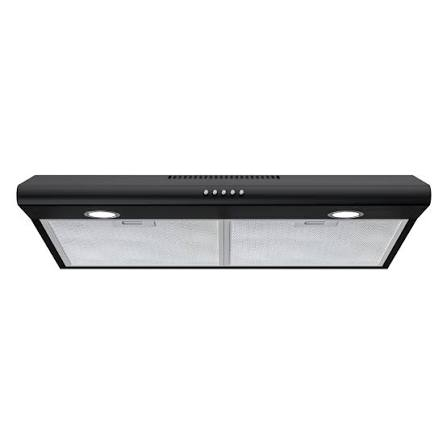
Under Cabinet Range Hood Exhaust: Ducted vs. Ductless, CFM Sizing & Code Guide
If you’ve ever sat in your kitchen and sucked at the fumes from a detector, then you’re aware of the reason why an Under Cabinet Range Hood Exhaust is crucial. It’s the system that’s hidden beneath your upper cabinets that carries steam, smoke, grease, and heat from your cooking surface- directing it to the outside via the ductwork, or filtering it before returning it to the kitchen.
Making this the right choice isn’t only about convenience. A bad setup could lead to an uninviting kitchen, a failure to pass a safety test, or even in the worst instances, a danger to your health. This guide will explain the exact way that Under Cabinet Range Hood Exhaust functions, how to decide between ductless and ducted, and how to measure the right way and avoid the pitfalls that cause a lot of trouble for DIYers and some contractors.
What Under Cabinet Range Hood Exhaust Actually Does?
A Under Cabinet Range Hood Exhaust that is under the cabinet is situated directly underneath an upper cabinet, over your stove. Inside is an air blower and the grease filter. When you turn it on, the fan draws air through the filter before pushing it out via one of two routes: either outside your home (ducted) or back into the kitchen after filtration (ductless or Recirculating).
This one choice of design -ductless or ducted will determine everything else related to performance, installation costs, and code-related specifications. It’s essential to understand before buying any product.
Ducted (Vented) Exhaust:
A ducted Under Cabinet Range Hood Exhaust is connected to ductwork -rigid metal, semi-rigid, as well as flexible which connects to a wall cap or roof cap that is outside of the house. A damper flap opens backwards when the fan is running and closes when the fan is off, stopping the outside air from re-entering the house.
This is the most efficient alternative because it gets rid of smoke, grease, water, and combustion byproducts out of the house completely instead of merely taking out odors.
Ductless (Recirculating) Exhaust:
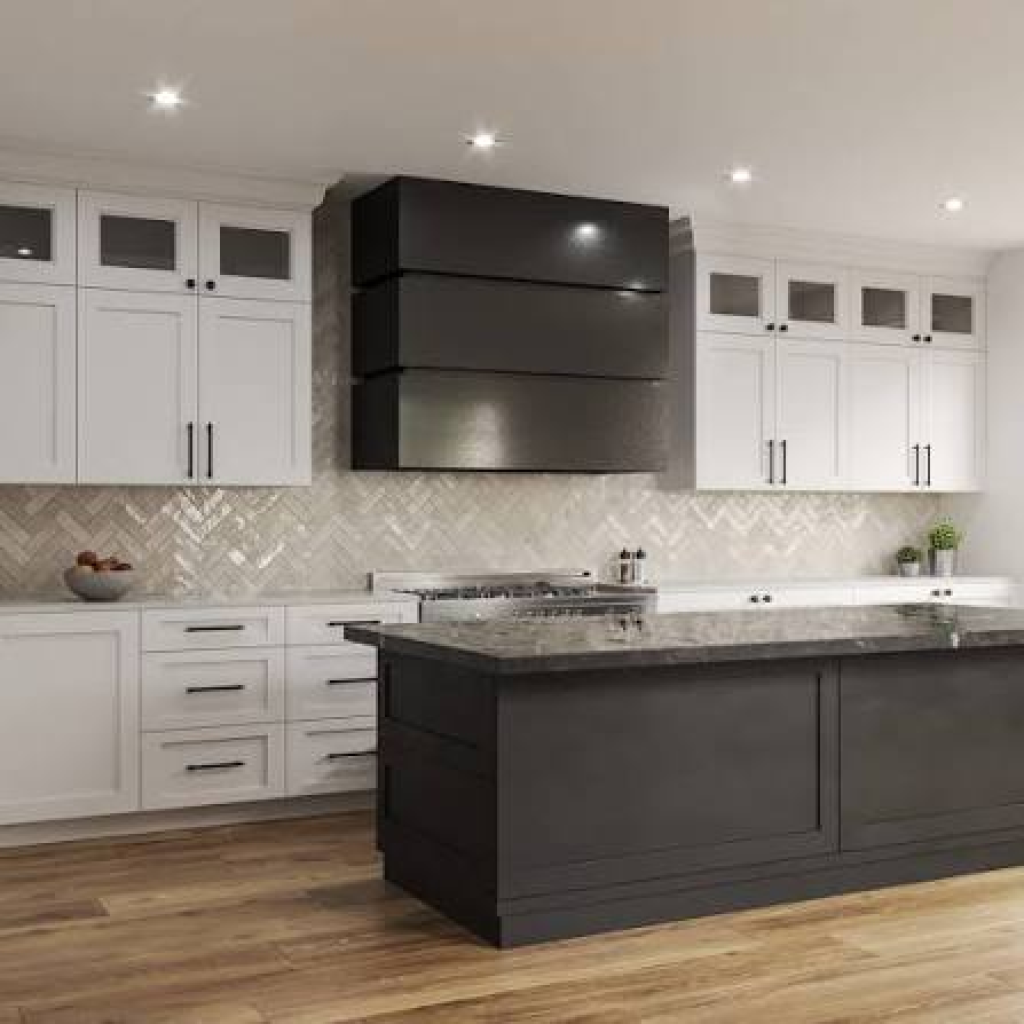
A ductless Under Cabinet Range Hood Exhaust carries the air into a filter for grease; it is followed by a charcoal or carbon filter that absorbs the smell before returning the air to the kitchen. The hood isn’t attached to a wall or roof. Access is required; this is the reason it is the standard for condos, apartments, and kitchens where ducts aren’t feasible.
The downside is that charcoal filters can only control the odor. They can’t eliminate moisture, heat, or fine particles and the combustion gases that result from cooking gas.
Ducted or. Ductless: Which Do You Really Have?
This is the shortest version. If you’re able to connect the ductwork through an external ceiling or wall, ductwork is generally the most effective option in the long run, especially in the case of gas ranges. Ductless is an option you have to accept when the ducting option isn’t legally or physically possible.
| Factor | Ducted | Ductless |
| Eliminates smoke, grease and odor | Completely removes home from | Recirculates air |
| Eliminates moisture and heat | Yes | No |
| The best gas ranges for you. | Highly highly recommended | Good enough, but not ideal. |
| Installation complexity | Greater (wall/roof penetration) | Lower (no ductwork) |
| Costs per year | Nothing beyond the cleaning of the grease filter. | Filter replacement for charcoal every 3 months |
| A typical use case | Houses with access to the exterior wall or roof | Condos, apartments, interior kitchens |
One method to consider is that the electric cooktop in a ventilated kitchen can be made to work with ductless ventilation. Gas ranges in regular use are a more compelling argument for ductless, because they deal directly with combustion byproducts, not only cooking smoke.
How Much CFM Do You Actually Need?
CFM (cubic feet per minute) is the measurement of the amount of air that is being moved by the fan. It’s probably the most misunderstood specification for a Under cabinet range hood exhaust. Purchase too little, and you won’t be able to clean smoke. Buy too much without thinking it through, and you’ll encounter safety and code problems.
There are two standard sizes:
- The procedure to calculate BTU (gas ranges): Divide the total BTU output by 100.
- Method for measuring kitchen size: Roughly 1 CFM per square foot of kitchen space. Used as a general guideline for setups using induction or electric.
Duct Size, Materials, and a Problem Most Guides Skip:
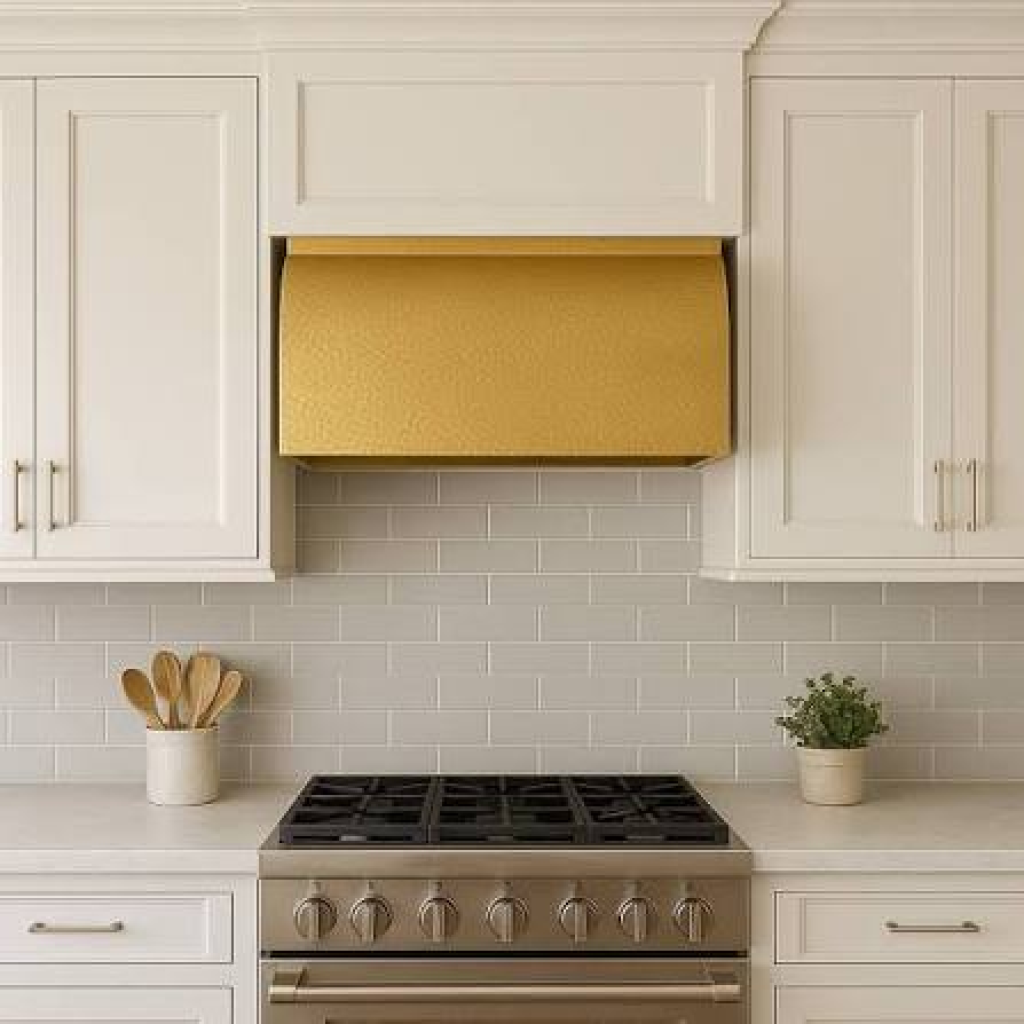
Under Cabinet Range Hood Exhausts usually connect to a duct of two kinds: a rectangular 3.25” x 10” duct (common in walls with tight spaces) or a round duct that is typically six” or 8” in diameter. Make sure to check the size of your hood’s collar prior to purchasing ducting; incompatible transitions will stop airflow right away.
This is the thing that many buying guides miss: the fact that the material of the duct and its length are as important as the fan’s CFM rating.
Independent testing of Under Cabinet Range Hood Exhausts has shown that flex ducting causes significantly greater pressure drops than rigid ducts that are the same length, which reduces airflow speed and the degree to which the hood can actually absorb grease and smoke. Simply put, an air conditioner that’s rated at 400 CFM could deliver significantly less airflow when forcing the air over 15 feet of crinkled flex pipe and two tight elbows.
Practical lessons:
- Use semi-rigid or rigid round duct wherever you can. Use flexible ducts for shorter connector runs only.
- Every elbow has an area of resistance. Make sure you limit bends outside your hood.
- Make sure that the length of the ducts (accounting for those elbows) is between 25 and 35 equivalent feet to fit the standard 300-400 CFM hood. The longer runs require a larger or stronger blower to account for.
- Secure joints with foil (metal) tape or mastic -standard cloth duct tape dries out and becomes unusable over time.
Wall Cap vs. Roof Cap: Where the Air Actually Exits
Wall caps can be the most commonly used option for a Under Cabinet Range Hood Exhaust that is under the cabinet because it’s a brief, direct run, especially when the kitchen is positioned against a wall that is exterior. It has damper flaps that block backdraft and also keep pests away when the fan isn’t operating.
Cap on the roof occurs when the kitchen is located inside, or there’s no outside wall in the vicinity. It’s a matter of routing duct horizontally through joist bays or an attic, and roof flashing and weatherproofing; it’s the job of roofing contractors or a licensed contractor and not something that can be completed in a single day.
A rule of thumb applies regardless of the method you decide to use: Never connect the duct of a Under Cabinet Range Hood Exhaust into an attic, in a soffit, or a wall cavity. This traps moisture and grease that cause mold and fire danger in the long run, and is in violation of the majority of mechanical codes.
Mounting Height, Makeup Air, and the Code Question Everyone Skips
Two code-related elements consistently frighten people when installing.
The height of the mounting is dependent on the range’s type. Under Cabinet Range Hood Exhausts for electric cooktops are typically placed 24 inches higher than the cooking surface. For gas stoves, this height increases to about 30 inches due to the fact that gas flames are hotter and require greater clearance. If you mount too low, there is a possibility of damaging your heat or causing code issues; install too high and efficiency decreases.
Air makeup is a less apparent one. When an Under Cabinet Range Hood Exhaust fan that is powerful is able to draw large quantities of air from the house, it is necessary to be replaced — otherwise, the home will depressurize. For instance, in the U.S., the International Residential Code (IRC), Section M1503.6 stipulates that makeup air be used at a speed roughly equal to the rate of Under Cabinet Range Hood Exhaust whenever the Under Cabinet Range Hood Exhaust has the capability of delivering more than 400 CFM. It’s not a trivial issue that depressurization of sufficient strength can draw combustion gases, such as carbon monoxide, back into your home via an appliance like a furnace or water heater flue.
If you’re considering a Under Cabinet Range Hood Exhaust that falls within that 400+ CFM range, you should consider a damper for your makeup and confirm this with the local building department prior to completing the installation. Outside of the U.S., the exact procedure differs in that the UK uses Approved Document F. Canada uses their National Building Code, and Australia employs AS 1668.2; however, the basic principle remains identical everywhere: large Under Cabinet Range Hood Exhaust require replacement air.
Installing It: What’s DIY and What Isn’t
An easy wall-cap installation that utilizes an already-existing duct opening can be feasible for an experienced DIYer. Making a new roof opening and running duct through multiple floors, or installing an electrical circuit that is dedicated to the project, is an entirely different matter.
General installation sequence:
- Choose the shortest possible conduit route for a duct that connects to an exterior ceiling or wall.
- Cut the opening for mounting according to the template provided by the manufacturer of the hood.
- Connect the transition fitting to the hood collar with the principal duct.
- Run semi-rigid or rigid pipe, sealing every joint using foil tape or Mastic.
- Install the roof cap or wall cap with the proper flashing or weatherproof seal.
- The hood should be placed at the proper level for the type of range you have.
- Connect the electrical circuit -higher-CFM units usually require an additional circuit.
- Check the airflow and make sure that the damper that opens backdraft is open and closes in a proper manner.
When should you call an expert: roof cap installation, multi-story duct runs, the installation of new circuits for electrical power, and anything that is near the gas line. There’s no place to guess.
Why Your Under Cabinet Range Hood Exhaust Isn’t Pulling Smoke?
- This is one of the most common complaints and it’s rarely the fan the cause. If you are considering buying an entirely new hood, make sure to look over these points:
- Grease filter that is blocked — easily the most frequent reason.
- Overly long or undersized duct run. Too much flex or too many elbows could cut the real-world CFM much less than the recommended CFM.
- Damaged or blocked outside cap -debris, bird nests, or a stuck damper flap can block airflow near the point of exit.
- Incorrect CFM range: An underpowered hood of a gas range will struggle for a long time, regardless of the maintenance.
- Saturation of the filter without ducts — If you’re running a recirculating fan that is saturated, the charcoal filter will stop absorbing the odor, even though the fan is running.
What Is The Cost Best Under Cabinet Range Hood Exhaust?
Prices vary widely according to country and even city; however, U.S. cost data gives an important base. The cost of installing a range hood typically ranges from $ 60 to $ 660 depending on the location, and local averages typically range between $161 and $374, depending on labor costs and the complexity of installation (Source: HomeAdvisor local cost data). A standard wall-cap installation that has an existing opening is situated towards the lower end; an entirely new roof cap installation that has air ducts that run through an attic is situated towards the upper end.
If you’re looking for a “Under Cabinet Range Hood Exhaust installation near me” or looking at estimates of local HVAC contractors and appliance installers as well as kitchen renovation contractors, you should be particular about the length of the duct as well as hood CFM. Also, whether it’s a brand new construction or a retrofit, these three factors are the primary reason for the variance in prices between quotations. Outside of the U.S., expect these numbers to change depending on local labor markets and be treated as a benchmark for direction rather than a fixed figure.
Alternatives Worth Knowing About:
Hoods for under-cabinets aren’t the only option. In certain layouts, they’re not the most effective.
- Wall-mounted chimney hoods have a higher CFM capacity and are more of a style statement.
- Hoods for islands are used for cooktops on kitchen islands that are vented to the ceiling.
- Ventilation downdraft is retractable near the cooktop, instead of overhead, which is useful when space in the cabinet isn’t there but less effective when using high-height pots.
- Combination units of microwave and hood space-saving, usually with a lower CFM than hoods with dedicated vents.
Maintenance That Actually Keeps Performance Up:
- Clean grease filters in dishwashers that are safe to use every between 3 and 6 months.
- Replace ductless charcoal filters every 3-6 months.
- Examine your roof and exterior walls annually for any nests or other debris.
- Be sure to inspect the backdraft damper frequently to ensure that it is fully shut and sealed correctly.
An Under Cabinet Range Hood Exhaust that’s been maintained according to the schedule is usually more efficient than a costly model that isn’t maintained.
FAQ
1.Do Under Cabinet Range Hood Exhaust require venting outwards? Not always. Ducted (vented) range hoods release the air outdoors and work better than models with ductless vents; However the ductless models are able to filter and recirculate air inside which is perfect for homes and condominiums which do not possess ducts outdoors.
2.What’s the CFM I require to run my Under Cabinet Range Hood Exhaust? As a general rule, you should use 100 CFM for every 10,000 BTU of output from a gas burner, approximately 1 CFM for every square foot in kitchen space for electric and induction configurations.
3.Do I need to take my Under Cabinet Range Hood Exhaust up to the attic? No. Venting to an attic wall, soffit, or cavity will trap moisture and grease that can cause the risk of fire and mold and is in violation of many mechanical codes. Exhaust should be terminated outside by an attic or roof cap.
4.What size of duct will I require for an Under Cabinet Range Hood Exhaust? Most models use either a 3.25” x 10” rectangular pipe or a 6 “- 8” circular duct, according to the collar of the hood. Make sure that the size of the duct is conformity to the requirements of the manufacture.
5.Do you think that a Under Cabinet Range Hood Exhaust that is ductless is worth the price? It’s a viable option in the event that ducting isn’t feasible in apartments, condos or kitchens that are in the interior of. However, it only eliminates odor, rather than heat, moisture, or combustion byproducts. It’s an inferior option to ducting performance.
6.What does it cost to put in Under Cabinet Range Hood Exhaust ductwork? U.S. installation costs typically range from $60 to $660. Typical local prices range from $161 to $374, based on the complexity of ducts and labor costs. Roof-cap installations are generally more expensive than simple wall-cap installations.
7.What is the reason my Under Cabinet Range Hood Exhaust is no longer pulling smoke as it did in the past? The most common reason is a blocked grease filter. This is followed by bent or long ducts, a cap that is blocked on the exterior, or (for those with ductless units) a saturated charcoal filter. Make sure the filter is checked before you assume that the fan is failing.
8.Does a range hood share a duct with a dryer or bathroom fan? No. The ducting for a range hood should have its own separate exhaust route. The ductwork shared with a dryer or bathroom fan vent is a violation of code in a majority of jurisdictions. It creates grease accumulation and fire danger within a duct that isn’t specifically designed for it.
9.Do I need to use makeup air for the Under Cabinet Range Hood Exhaust? In the U.S., it is necessary to use makeup air per IRC M1503.6 when the hood has over 400 CFM to stop the house from becoming depressurized and bringing combustion gases back into the home through other appliances. Check the threshold in conjunction with the local building department, as the requirements are different for each location.
9.What’s the height of the mounting different between gas and electric ranges? Electric and induction cooktops generally require an average of 24 inches higher than the cooking surface, while gas ranges require around 30 inches due to the greater temperatures of the flame.
Final Thoughts
The Under Cabinet Range Hood Exhaust in your under-cabinet can be boiled down to three factors, which are far more important than the brand or cost: whether you choose either ductless or ducted, whether the CFM is actually in line with your range, and whether the ducting route is small enough and clean to supply the CFM on the ground. Make sure you’re doing these three things correctly, and the rest- filtering, height of the mount, maintenance, and mounting height- are easy to keep track of.
If you’re considering a new installation, begin by examining the exterior wall or roof access. Then, calculate CFM using the BTU output of your range, and verify the makeup air requirements with the local building department prior to deciding whether you should purchase ducting or a hood. Planning can save you many headaches later.
These information about Under Cabinet Range Hood Exhaust are gathered from different surveys, medical tests and tech giants like Reviewed and more. Our top priority is to provide you valuable information about Under Cabinet Range Hood Exhaust .
For More Details About Different Electric stove Click Here.