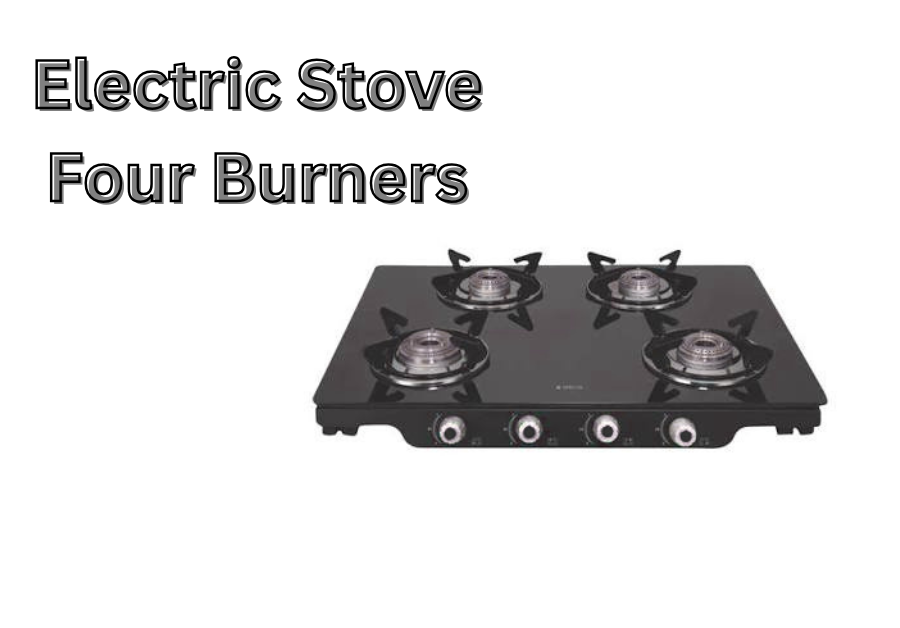
Electric Stove Four Burner: Complete Buying Guide, Types & Prices
A Electric Stove Four Burners is a cookware with four separate heating zones and is powered by electricity, not gas. It is available in three primary models including glass-ceramic coil, glass and induction and is the preferred option for kitchens that does not possess gas lines.
If you’re looking for one at the moment most likely you’re at the midst of remodel or a move to an apartment or an appliance that has died on you. Each of these scenarios has the same question in mind which one is the best fit for in your space, the budget and your cooking equipment?
This guide explains precisely what you need to know, and in what sequence you’ll need it in.
What Is a Electric Stove Four Burner, Exactly?
A stove that is electric produces heat through electrical resistance. It’s not an open flame. The “Electric Stove Four Burner” model has four heating zones that are separate above, which gives enough to cook a complete meal – an entree meal, a side dish, sauce, and a warming dish without the need for an additional six-burner range.
It’s available in two forms:
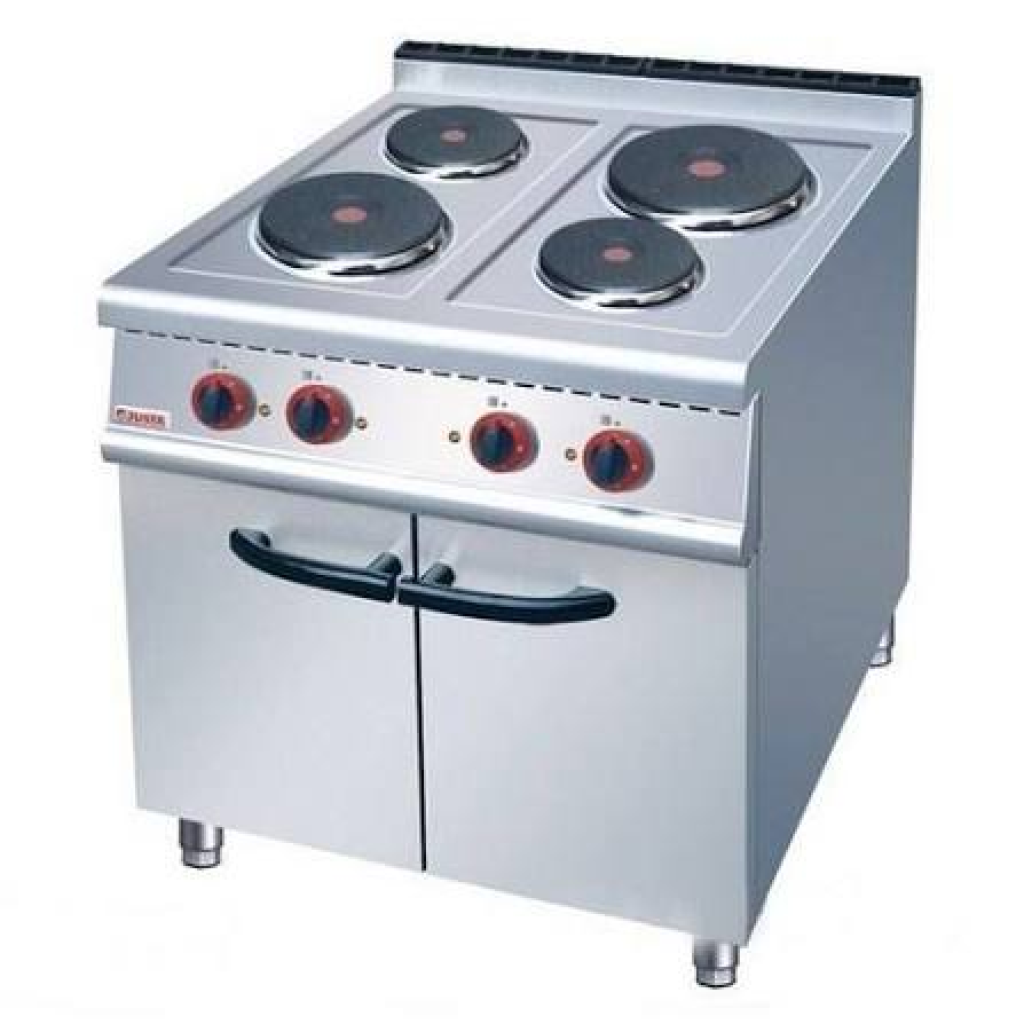
- Freestanding stove which includes the oven and the cooktop come together in one unit. It’s what people think of when they think of “Electric Stove Four Burner,” and it’s the most straightforward option to set up as a simple swap to an older unit.
- A built-in cooker It’s just a cooking surface, incorporated on a countertop and together with a wall oven. Flexible enough for customized kitchen layouts, but also a larger undertaking.
One note about terminology because it can confuse many customers The word “range” always includes the oven. The term “cooktop” is surface-only. If the listing mentions “Electric Stove Four Burner,” check which model you’re actually viewing before you get in love with the cost.
The Three Types: Coil, Glass-Top, and Induction:-
It’s the choice that determines everything else which is why it’s important to understand fully before looking at any price.
Coil (exposed element):
It is the traditional style of four metal coils that emit a red glow when heated. It’s the most affordable to purchase and the most affordable to fix, as individual elements are easy to replace and it’s the slowest to heat, and the most difficult to keep clear, as spills tend to flow into drip pans that are underneath.
Glass-ceramic (radiant) cooking surfaces:-
It uses the same type of heating coil under an uncluttered glass surface. The result is an easy-to-clean top and slightly more evenly heated than coils, but at an increase of about 5% in cost. This is the most commonly used middle-priced option today, mostly because the difference in cleaning will justifiably justify the upgrade for the majority of households.
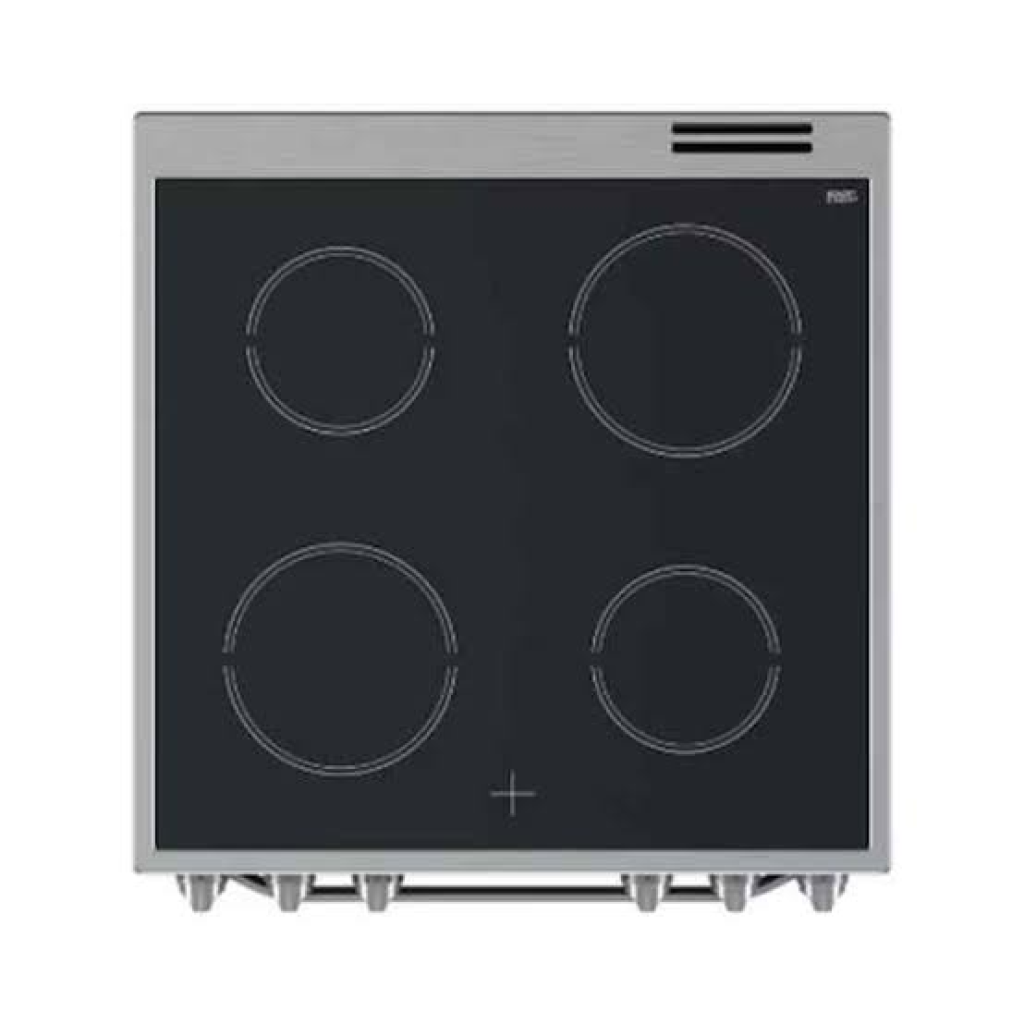
The Electric Stove Four Burners with induction:-
They are different from other cooktops in that they utilize magnetic fields that Electric Stove Four Burner directly, instead of heating the surface before. This means they respond faster (closer with gas than a glass-top or coil) and higher energy efficiency, as well as the cooking surface stays cooler in the pan. However, induction is only compatible using magnetic cookware and is costliest of all three cook wares to purchase.
These are how they stack in comparison:
| Factor | Coil | Glass-Top (Radiant) | Induction |
| Heat-up speed | Slow to moderate | Moderate | Fast |
| Temperature control | Moderate | Good | Excellent |
| Energy efficiency | Low to moderate | Moderate | High |
| Cleaning | Harder — crevices trap spills | Easy — flat surface | Easiest |
| Cookware required | Any flat-bottomed pan | Any flat-bottomed pan | Magnetic cookware only |
| Upfront cost | Lowest | Mid-range | Highest |
A simple, yet obvious suggestion before you decide to go with using induction is to grab a refrigerator magnet to try it on your current pans and pots prior to making a purchase. If the magnet adheres to the base of the pan, it will work on induction. If it doesn’t, or only sticks, the pan will remain in the cupboard. The ten-second test can save many buyers from regret, and it’s important to do it with your own cookware instead of relying on the product’s label by itself.
Who Should Buy Which Type of Electric Stove Four Burner?
There isn’t a general “best” here — it really depends on the situation.
- Apartment dwellers and renters with no gas hookup typically do well with glass-top or coil; it’s not necessary to spend money on induction for a long-term stay.
- Households who value simple cleanup and a sleek appearance tend to choose glass-tops for the ideal balance between convenience and cost.
- Home cooks who want gas-like responsiveness without the need to install gas lines usually opt for induction despite the price increase and the requirement for cookware.
- Anyone with a complete set of copper, aluminum, or non-magnetic stainless cooking equipment who doesn’t want to buy a new set should avoid induction completely or set aside money for new cookware and pots over the stove.
What Is Cost of Electric Stove Four Burner: Thinking in Tiers, Not Fixed Numbers?
Prices differ a lot based on currency, country, and retailer; therefore, precise figures don’t really help in this instance. What’s important is knowing the different prices, which can be found nearly everywhere:
- Budget Tier – coils or independent—the lowest entry point and generally the most widely used option in the world.
- Mid-tier glass-top freestanding. A moderate step higher, usually justifies itself by simpler cleaning and a more appealing appearance.
- Premium level – induction, freestanding or integrated. The highest cost is driven by the technology and often driven through touch controls as well as the extra features included.
In-built cooktops (glass-top and induction) are located in similar bands to freestanding cooktops, with the exception of the oven cost. No matter what currency you use, you should compare prices with three or four retailers prior to purchasing — the identical model could vary in price in a significant way based on the place you buy it.
How to Actually Electric Stove Four Burner: A Step-by-Step Approach
Instead of beginning with a list or a list of “top models,” it’s better to go through this in order:
- Verify your electrical settings first. The majority of Electric Stove Four Burners require high-voltage circuit. It is commonly known as 120V in North America, though exact requirements and wire gauges can differ in accordance with the country and electrical codes specific to the country. If your kitchen doesn’t contain the right circuit, you should engage an electrician before you buy the stove.
- Create your budget. Decide upfront whether you’re in glass-top or induction territory; this narrows everything else.
- Find your cooking equipment. Run the magnet test to see if there is an induction visible on the table.
- Choose between freestanding or integrated. Freestanding is the most common and easier option to replace a straight one. Built-in is a good option if you’re planning to build a wall oven.
- Sort your top features, including the wattage and element bridges (for linking two stoves in an Oblong pan) and a self-cleaning function. Touchscreen controls as opposed to knobs.
- Check out warranty terms, particularly when you’re considering touchscreen controls, which are more expensive to repair than basic knobs when things go wrong.
Installation: What to Actually Expect:
Since this can cause people to be agitated more than most other things, it’s a reason to spell out the following points clearly:
- A specially designed, properly rated electrical circuit is essential for nearly all Electric Stove Four Burners. Verify the precise amperage and wire gauge with the specifications of the manufacturer and the local electrical code, as it varies from country to country.
- Proper ventilation is important, especially in more compact or closed kitchens. An exhaust fan or range hood is highly advised.
- The unit must have an even surface as well as the clearance of cabinetry as stipulated within the instruction manual.
- Employing a licensed electrician to do any new electrical work is the best option; it’s not a space to experiment, and in many areas, it’s an obligation for renovations that are permitted.
Common Mistakes Worth Avoiding:
Some patterns are seen time and time again for first-time buyers:
- Purchasing induction Electric Stove Four Burner equipment without checking compatibility, only to find that the induction doesn’t work.
- Inadequately estimating electrical work, and then being shocked by the added electrical bill.
- The price is the only factor to consider, not taking into account the wattage of the burner. This directly influences how fast it cooks.
- Dragging cast iron across a glass top surface can scratch or chip as time passes.
- The idea of not planning ventilation properly is a huge mistake is a huge mistake, particularly in a kitchen with a small space.
Keeping It Running: Maintenance by Type
- Electric Stove Four Burner with coils require that the elements be lifted regularly to clear the drip pans that are underneath, and any warped or damaged coil needs to be replaced instead of remaining in service.
- Surfaces with glass tops require cleaning products that are safe for ceramics as well as pads that are not abrasive. Avoid moving heavy cast iron across the surface.
- The induction cookers are the simplest to clean: a gentle cloth after every use is typically sufficient since there’s not a baked-on component to clean.
In all three cases, wiping off spills after they’ve cooled instead of while the surface remains hot will prevent any residue from forming and making it much more difficult to get rid of later.
A Few Safety Basics:
Do not let the cooking surface go unattended during the time it is being used. Keep the packaging, towels and other household items that can ignite away from heat zones. Induction and glass-topped surfaces keep their heat in place even when the element shuts off; thus, treat the surfaces in the same way for a couple of seconds after you’ve cooked, irrespective of what indicator lights are showing. All electrical connections should be completed by a qualified electrician and must comply with your local electrical codes. This isn’t a time to make a sacrifice to make an afternoon DIY project.
If Electric Stove Four Burner Isn’t the Right Fit:
- Portable induction Electric Stove Four Burners are a great alternative, especially in very small kitchens that aren’t able to accommodate the full range.
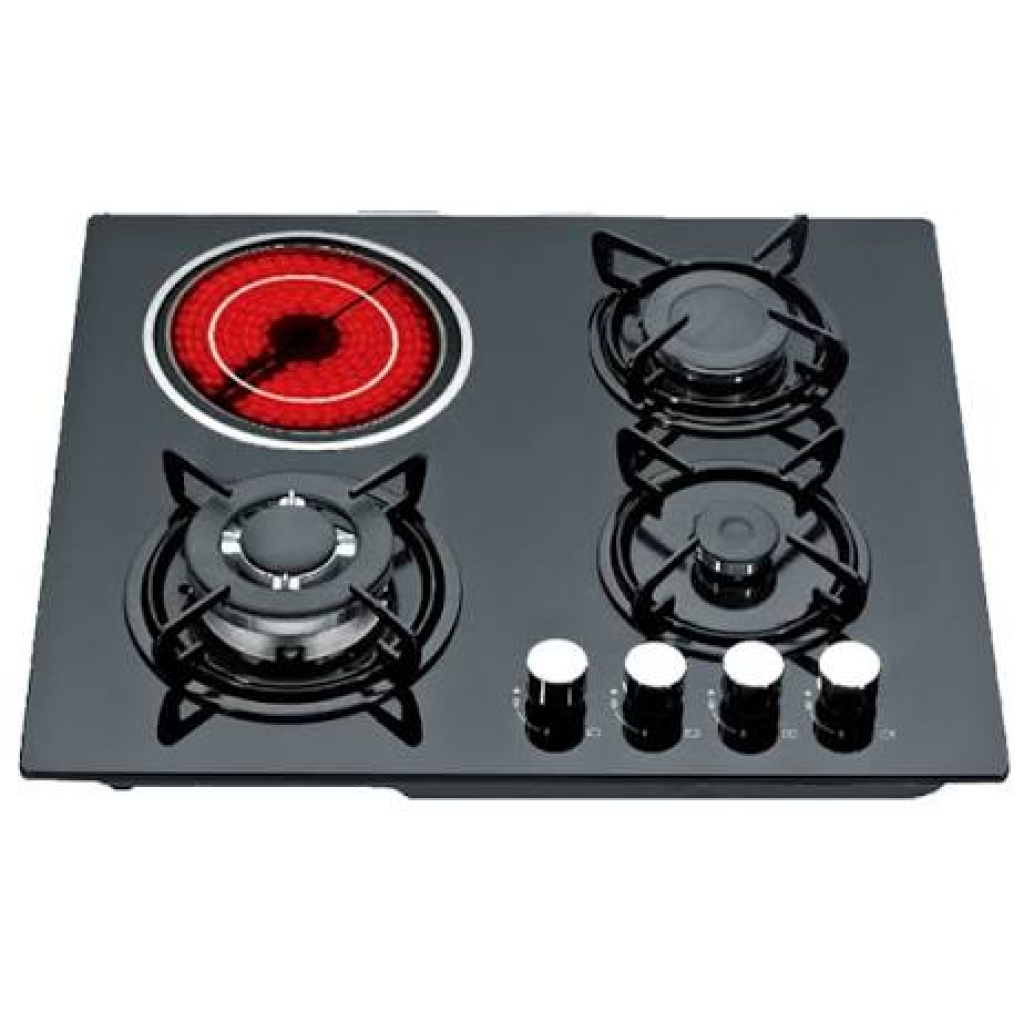
- Two-fuel Electric Stove Four Burner combine a gas cooktop and an electric oven for cooks who require the control of flames but require electric baking.
- 6-burner stoves are a fantastic choice for families that have larger numbers or who often cook for large numbers of people.
FAQ
1.What Wattage Do the Electric Stove Four Burner Have?
A Electric Stove Four Burner configuration can range between 5 and 9000W depending on its size as well as the amount of burners operation simultaneously and each one producing between 1200 and 3000W.
2.What is the amps an Electric Stove Four Burner require?
This is contingent on the standards for your particular country and the particular model that you are considering, but all electric ranges require a separate high-amperage circuit. Always refer to the manufacturer’s specifications sheet and verify the requirements by consulting a licensed electrician, instead of just guessing.
3.Do I have to use normal pots in an Electric Stove Four Burner ?
Only if your cookware is magnetic; a simple magnet test at the bottom of your pan gives you a quick indication that if it is stuck strongly, it’ll work. If not, you’ll require induction-compatible cookware.
4.Is induction less expensive to run than an Electric Stove Four Burner ?
Generally, yes. Induction cookware is heated directly instead of making the cooking surface heat first. This is less energy-intensive compared to glass or coil stoves.
5.How long will Electric Stove Four Burners usually last?
If properly maintained, Electric Stove Four Burners typically last well into the tens of years. Coil models might require parts replacement sooner, and this is typically an inexpensive, minor solution rather than an excuse to replace the entire unit.
6.How come my oven not heating?
It’s typically caused by a worn-out or damaged element such as a defective switch for the burner or an unfastened connection. For stoves that have coils, the evident signs of warping and discolored parts are usually the cause. The issue can usually be addressed immediately. If the problem persists after replacement check the electrical connection with an electrician.
7.How can you tell the difference in cooking using the electric stove and one made of gas?
A range can be used to house the cooktop and the oven in one unit, which is freestanding. The cooktop is the sole cooking surface and is usually coupled with an oven wall-mounted in the kitchen.
8.Do I need to build an electric stove on my own?
The placement of the device itself is typically something that homeowners are able to handle, but electrical connections — particularly when it involves upgrading or running an electrical circuit — must be managed by an electrician licensed to comply with local codes and to ensure safety.
Conclusion
Selecting a Electric Stove Four Burner is really about three things that need to be addressed in sequence: what features your electrical setup is able to support, as well as what your budget is, and if your cookware is compatible with the one you’re leaning towards. Find those three points first, and everything else -whether built-in or freestanding, the features that matter, as does the retailer you purchase from — will fall more easily. If you decide to go with the cheapest coil or a top-quality induction stove, the one that is best for your home and cooking style will always perform better than the model that was most appealing on a specification sheet.
These information about Electric Stove Four Burner are gathered from different surveys, medical tests and tech giants like Reviewed and more. Our top priority is to provide you valuable information about Electric Stove Four Burner.
For More Details About Different Electric Stove Click Here.